Cashmere Scarves Wholesale: A Q4 2026 Buyer's Guide
- Share
- Issue Time
- Sep 8,2026
Summary
Q4 2026 wholesale guide to cashmere scarves: why the category is outperforming knitwear, the triangle and blanket silhouette shift, pashmina vs cashmere fiber facts, P.O.-ready spec numbers, and the 2026 color and corporate-gifting story for B2B buyers.
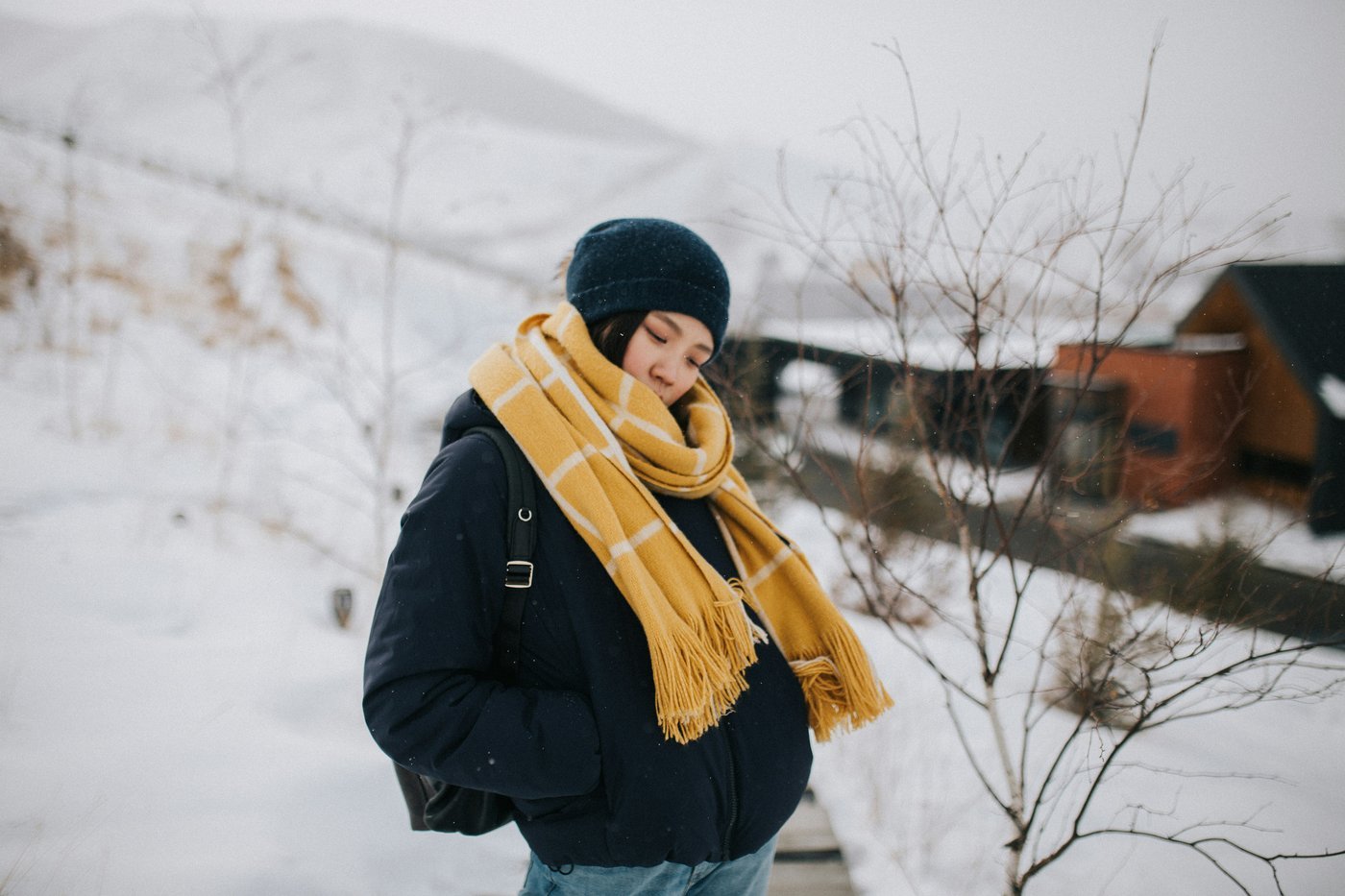
Every September, we get the same call from buyers we haven't heard from in a year: "Can you ship 500 cashmere scarves by November 15?" The answer is yes — but only if the spec sheet is already in our hands by mid-October, which means the buying decision has to be made right now, during the narrow window when Q4 holiday gifting budgets are still flexible. Cashmere scarves are the unsung hero of the autumn–winter wholesale calendar, and in 2026 they are quietly outperforming almost every other knitwear category on the line sheet. This guide is built from our 20+ years of cashmere knitwear production — from worsted shawls to oversized blanket wraps — cross-referenced against current 2026 market data on triangle scarves, pashmina sourcing, and the corporate-gifting shift toward "quiet luxury." If you are a fashion brand, concept store buyer, or corporate gift buyer planning your Q4 2026 program, the next eleven minutes will save you weeks of trial and error. For the past two seasons, we have watched the same pattern play out on our order books: scarves arrive late in the buying cycle, get rushed through production, and still ship out the door before the heavier knitwear program has even finished. The reason is structural. Cashmere scarves solve three problems that no other category solves as elegantly: The 2026 market data backs this up. Industry observers tracking the cashmere accessories category on Amazon report that the "Luxury Cashmere Winter Scarves for Men & Women" cluster peaked in February 2026 with monthly sales above 2,100 units — and that November–December Q4 typically delivers the second-highest volume spike of the year, behind only the late-January cold snap [source: Accio category analytics, 2026]. In other words, if you miss the September production window, you miss the November ship window, and you end up chasing the February spike with empty shelves. If you read trade press at all, you already know that the triangle cashmere scarf is the breakout format of 2026. According to the WeaveEssence OEM buyer briefing, April 2026, the triangle format moved from street style in Madrid and Paris in early 2025 to AW 2026 runways at Emporio Armani, Bottega Veneta, and Miu Miu — and is now carried by COS, Madewell, Aritzia, and ME+EM in the accessible-luxury tier and by The Row and Toteme at the designer tier. That kind of broad editorial confirmation is the strongest possible signal that the format will run for at least two to three more seasons. What this means for B2B buyers in September 2026 is concrete: a standard rectangular scarf alone is no longer a complete line. The full 2026 assortment is at minimum a three-format build — rectangle, triangle, and oversized "blanket" wrap — each in a coordinated color story. The blanket format is the one to watch: 70×200 cm woven wraps, fringed or self-edged, are the single fastest-growing silhouette we have seen on our Q4 2026 sample requests. Based on confirmed retail data and the OEM production data from WeaveEssence, the 2026 commercial sizing grid is converging on a clear set of standards: Ewsca's worsted cashmere shawl program covers the 70×200 and 80×200 oversized band; for buyers who want the new triangle format added to the line, the same yarn lot and Pantone palette can be re-cut into a 164×68.5 cm triangle without re-sourcing or re-dyeing. Within five minutes of any B2B scarf conversation, someone asks "Is this pashmina?" The honest answer is more nuanced than most suppliers give. According to the fiber-science breakdown published by Pashwrap, citing BIS IS 17269 and ISO 17751, the distinction is technically precise: The practical B2B framing is this: if your brand story is Himalayan heritage, handcraft, and heirloom positioning, you want pashmina, you want the NPIA "Chyangra Pashmina" trademark on the label, and you accept the 30–90 day production lead time and 200–300 piece MOQ that go with hand-spinning. If your brand story is accessible luxury, fast restock, and a global B2B supply chain that can scale, you want Grade A cashmere from Inner Mongolia, you want your SFA or Good Cashmere Standard certification on the inner label, and you ship from a 30–50 piece MOQ with 4–6 week lead time. Most B2B spec sheets we receive list "100% cashmere" and stop there. That is enough to clear customs; it is not enough to guarantee that two reorders will feel identical in the buyer's hand. The four numbers that actually drive consistency, hand feel, and unit cost are these: Our worsted cashmere shawl line uses 2/26 NM yarn at 12GG, fulled in soft water for the cloud-soft hand, and is available in hand-rolled, baby overlock, twisted-fringe, and self-fringe edge finishes. See the Ladies Cashmere Shawl specification page for the full dimension and weight table. Color is the cheapest place to refresh a line, and the most expensive place to make a mistake. For Q4 2026, the consensus color story across the European and US wholesale markets is a quiet-neutral core with one or two accent shades per program: For Pantone color matching, we hold ΔE < 0.8 on solid shades and offer 100+ stock colors for sample-pull. Custom Pantone development runs 7–10 days at lab-dip stage. For a corporate-gift or co-branded program, tone-on-tone jacquard — logo woven into the same-color background yarn — is the 2026 standard for "quiet luxury" branding; it reads only when the light catches the texture, and it never fades or peels [source: AceAccessory 2026 corporate-gift scarf report]. The corporate gifting market for cashmere accessories is the segment we have seen grow fastest in 2026. According to AceAccessory's 2026 corporate-gift scarf briefing, the prevailing brief from gifting agencies is for fabric that communicates luxury through hand, not through a visible logo. The expected spec: For buyers sourcing corporate gift sets in volume, the cashmere-sock-and-scarf bundle is the strongest 2026 play: same yarn lot, same dye batch, same MOQ economics, two SKUs that pack flat in a single rigid gift box. Our seamless 100% cashmere socks program is built to pair with the shawl line on exactly that shared-lot logic — see the cashmere-sock spec sheet for the bundling math. For Q4 2026, we are running two parallel scarf development paths, both backed by 20+ years of cashmere production and certifications including BSCI, Oeko-Tex Standard 100, Intertek, SFA, and Organic EU. Path A — In-stock, fast-turn. Pick from the existing worsted cashmere shawl program (70×200 / 80×200 / 50×200), add the seamless socks for a gift-set SKU, and we ship in 2 weeks at 100 pcs/style/color MOQ. Solid dye from 100+ stock Pantone matches; 14GG or 12GG gauge; hand-rolled, baby overlock, or twisted-fringe edge. Best for buyers who need to land on shelf by mid-November. Path B — Custom development, 4–6 week lead. Send your spec — format (rectangle, triangle, blanket, square), size, gauge, weight, edge finish, color story, branding method, packaging — and we prototype in 7–10 days with a hand sample, then scale to your MOQ (typically 100–300 pcs/style/color for custom; 200–500 pcs for fully custom dimensions). Best for buyers building a 2027 capsule or a corporate co-brand.1. Why Cashmere Scarves Became Q4's "Quiet Hero"
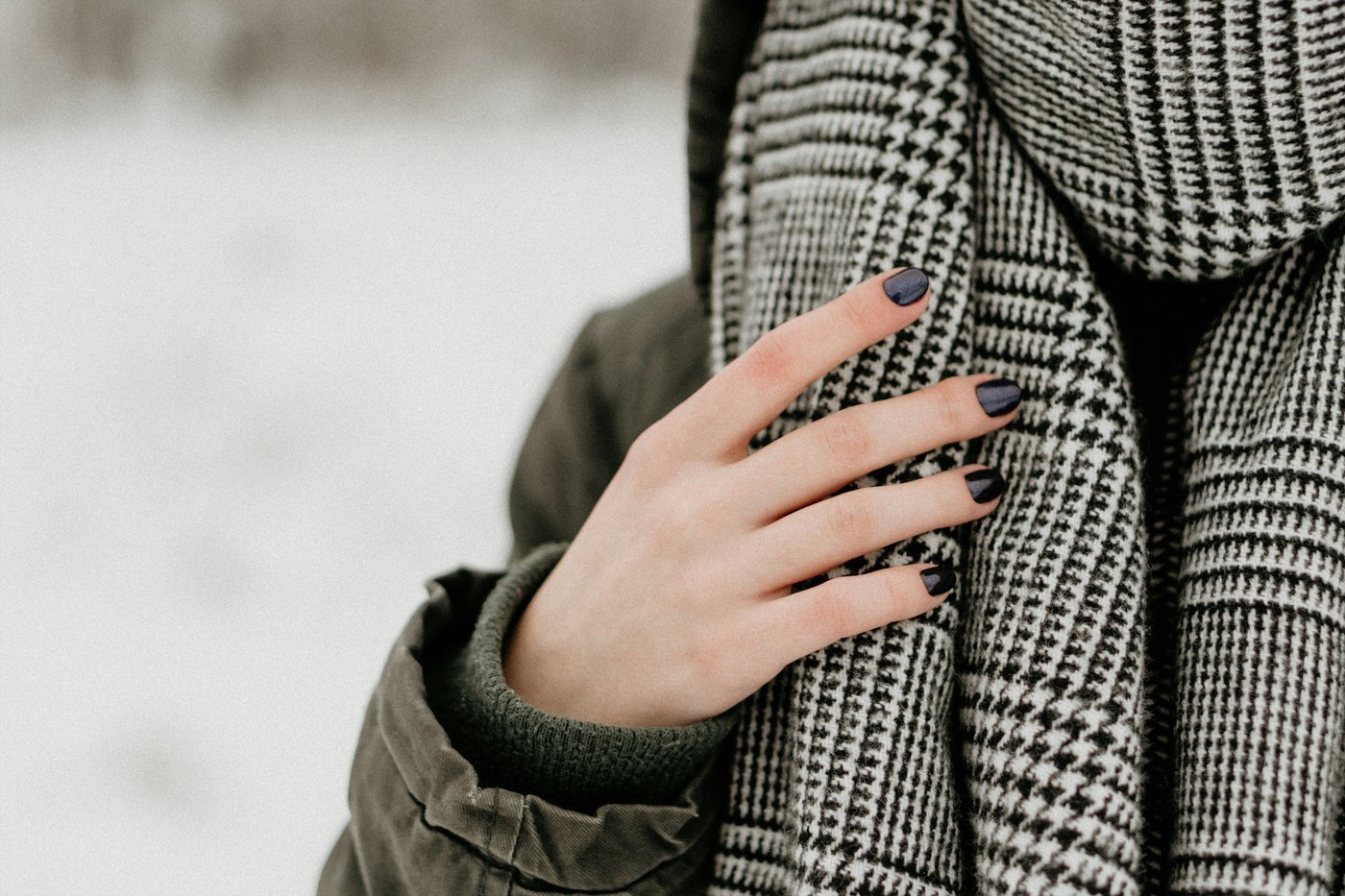
2. The 2026 Silhouette Shift: Triangles, Blankets, and the End of the "Standard Rectangle"

2.1 Sizing grid that actually sells
Format Dimensions (cm) Typical use Role in a Q4 capsule Classic rectangle 30×180 / 40×200 Daily neckwear, unisex, packable Volume driver Triangle (small) 84×7×7 Neckerchief, head-tying, neck accent Impulse add-on Triangle (large) 164 long × 68.5 to point Shoulder drape, light wrap Statement piece Blanket / oversized 70×200 / 80×200 Travel wrap, shawl, evening cover Signature hero Square stole 90×90 / 100×100 Foulard styling, head wrap, kerchief Heritage piece 3. Pashmina vs Cashmere — The Question Every Buyer Asks First
Fiber Source Diameter Processing Hand feel Pashmina (Chyangra / Changthangi) Himalayan goat, 4,000–5,000 m altitude 12–16 µm Hand-spun, hand-woven Softest natural fiber commercially available Standard cashmere (Alashan / Inner Mongolian) Various breeds, China + Mongolia 15–19 µm Machine-spun, machine-woven Very soft, slightly more body Grade A cashmere (premium band) Inner Mongolia, selected undercoat ≤ 15.5 µm Machine-spun, can be hand-finished Comparable to lower-grade pashmina Cashmere-silk blend Cashmere + mulberry silk Hybrid Machine-spun Sheen, drape, lower cost than pure pashmina 4. Fiber Specifications That Actually Matter on a P.O.
5. The 2026 Color Story: Neutrals With a Side of Vivid
6. The Corporate-Gifting Lane: Where Q4 Quiet Luxury Lives
7. How Ewsca Builds Your Scarf Line Sheet