Wholesale Cashmere Sweaters: A Sourcing Guide to Gauge, Yarn Count and Fit
- Share
- Issue Time
- Oct 22,2026
Summary
A sourcing guide to wholesale cashmere sweaters: the three buyers behind the word wholesale, how gauge and yarn count decide weight and drape, the twelve lines a specification should carry, fit grading and measurement tolerance, fully fashioned versus cut-and-sew, colour control and label compliance, and the six checkpoints between sample and bulk.
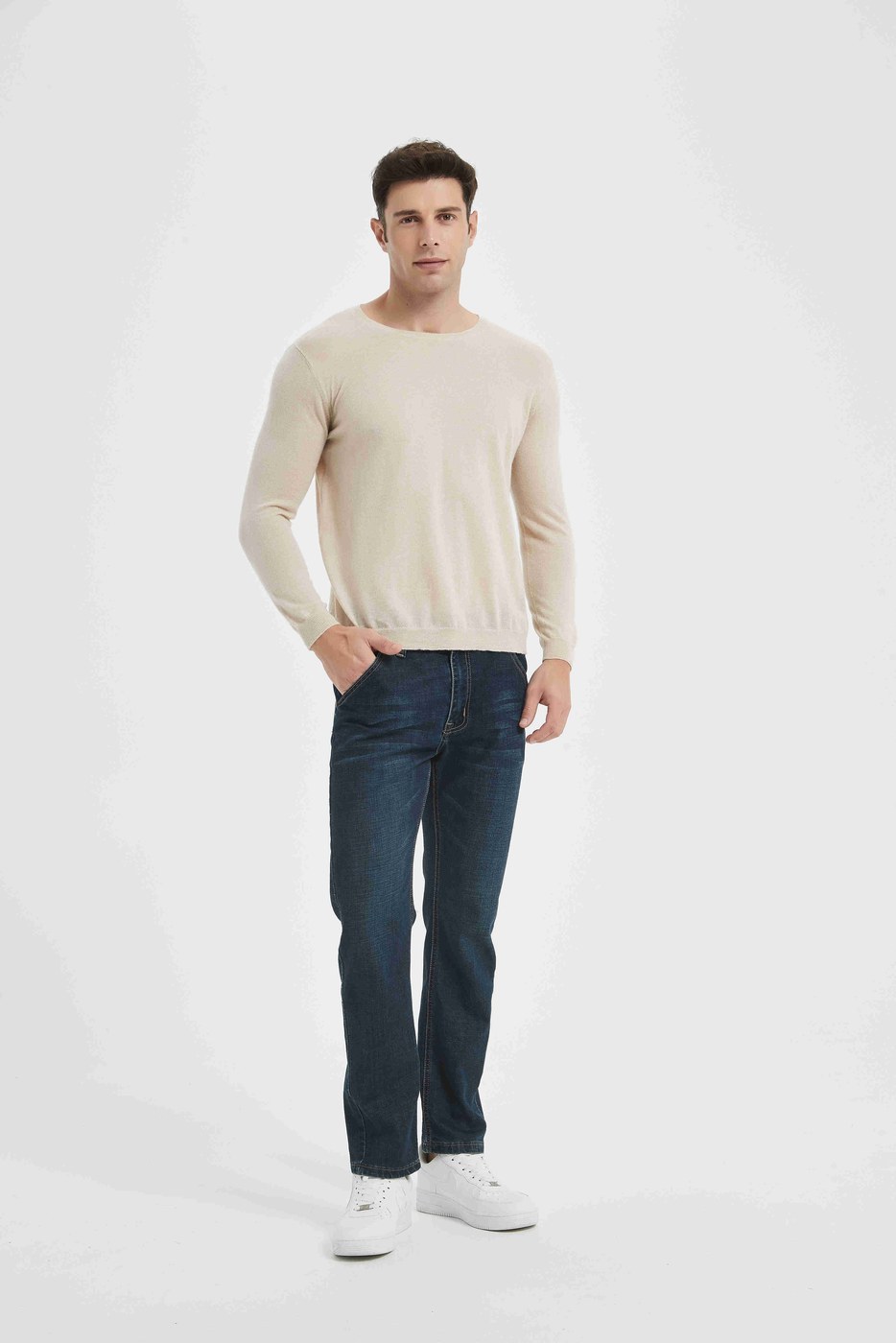
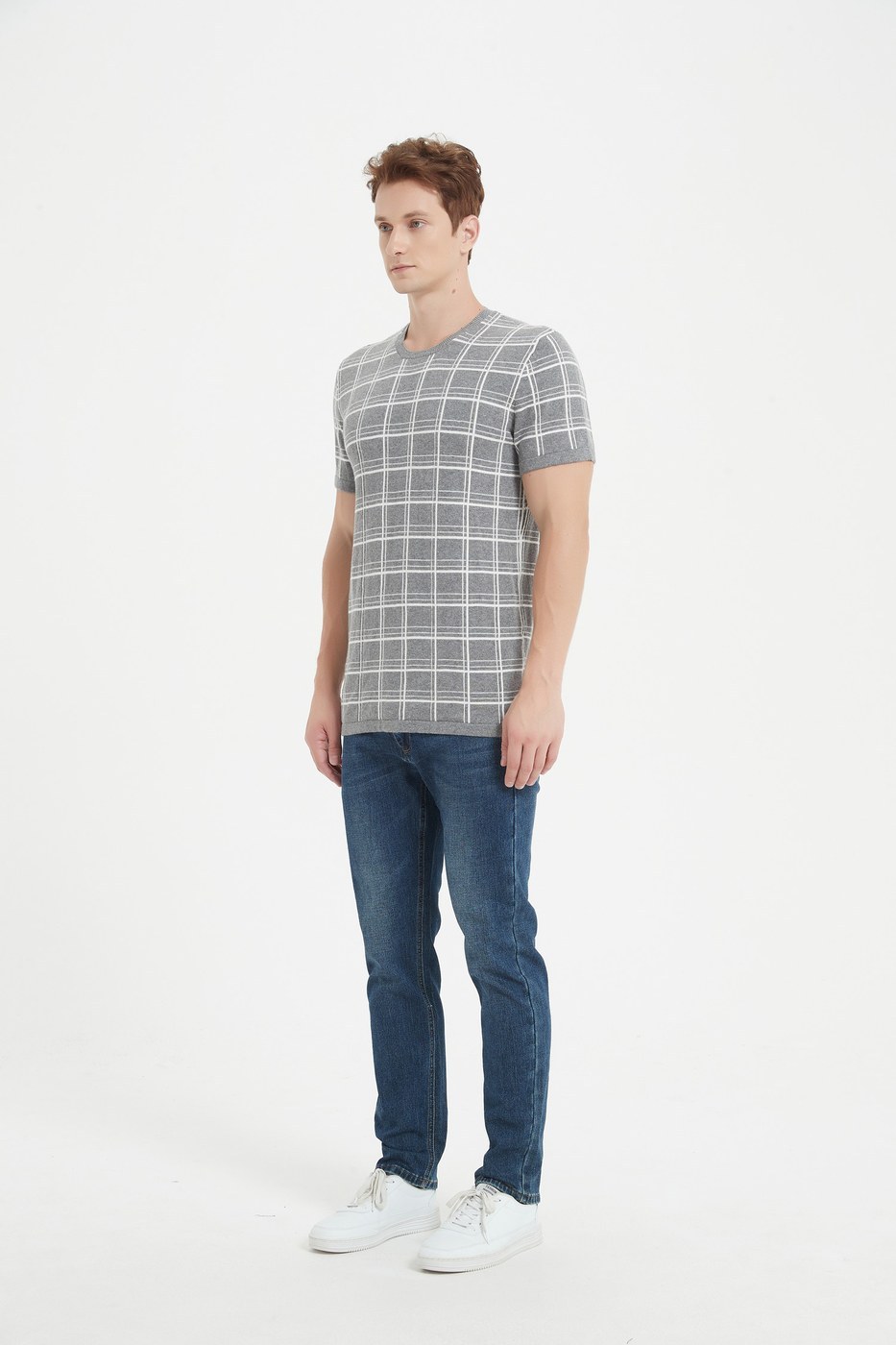
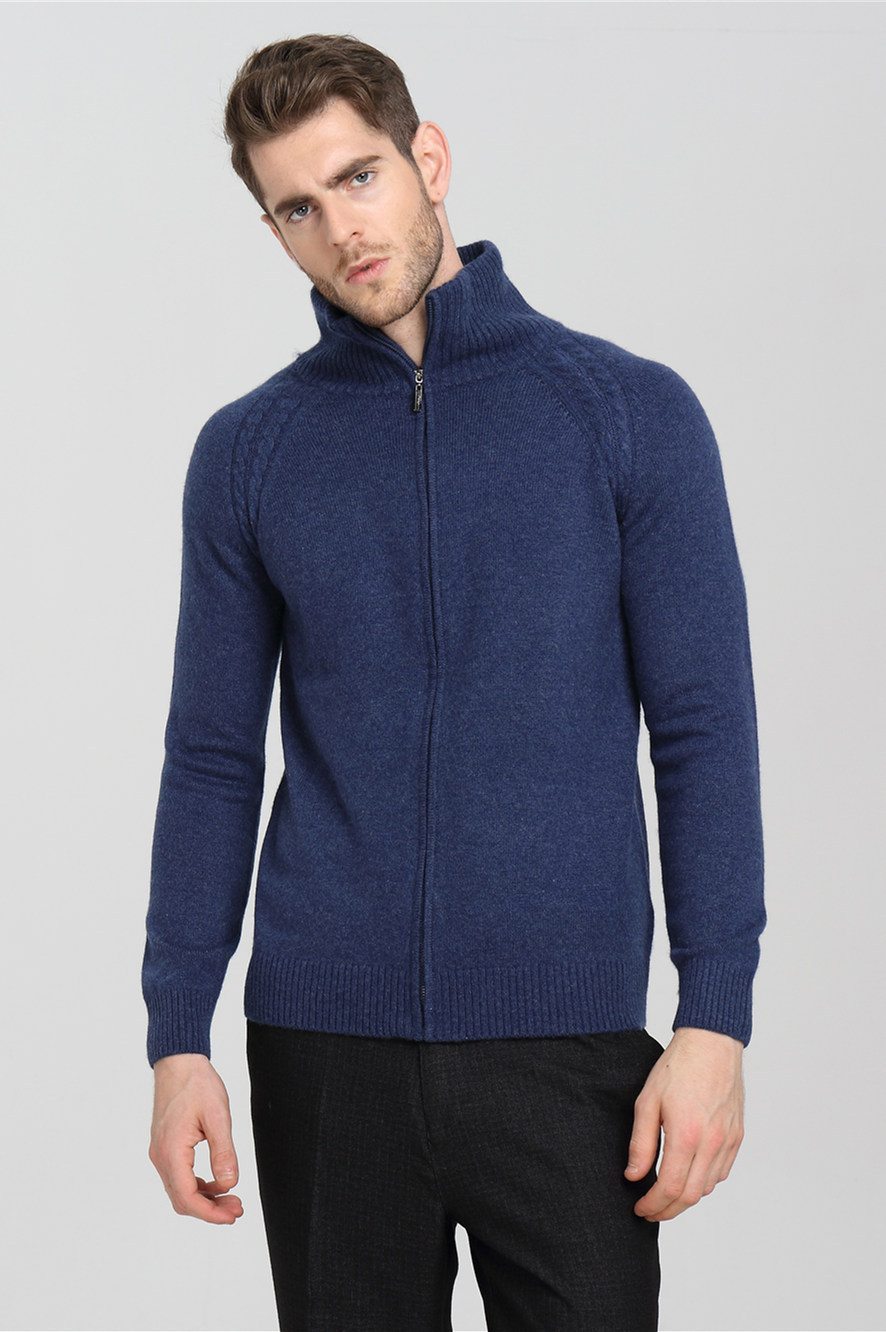
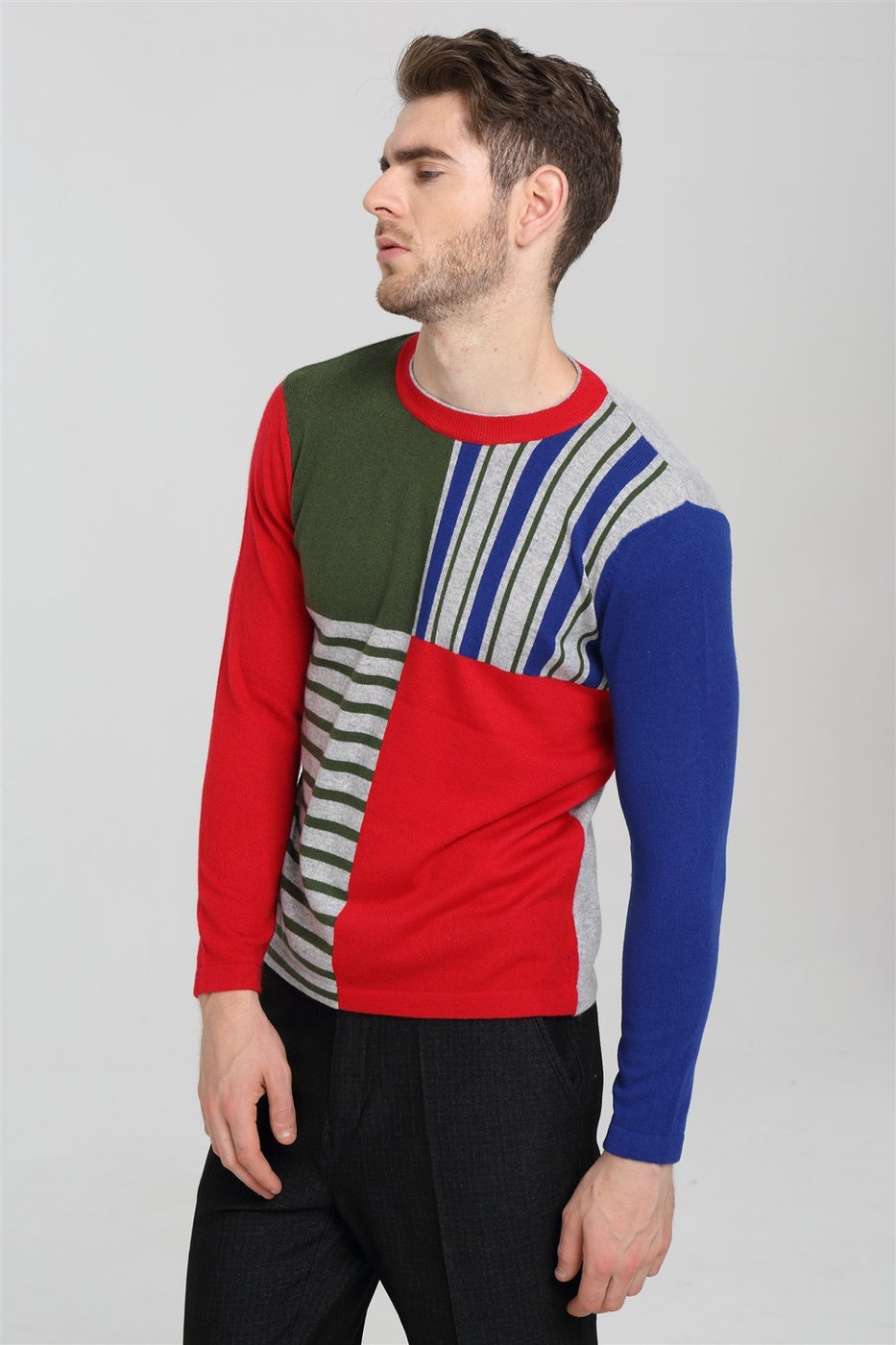
A sweater is the least forgiving thing on a cashmere range to buy, and the reason has nothing to do with design taste. A scarf hides a mediocre yarn inside a fold. A throw hides it in a pile. A sweater puts the yarn under tension across a shoulder, around an armhole and down a body, then hands it to a customer who will judge it in a fitting room mirror under bad light. Every decision that was fudged earlier in the programme becomes visible at that point, and none of it can be fixed at the packing table. That is why wholesale cashmere sweaters are bought on numbers rather than on adjectives. Gauge, yarn count, stitch density, rib heights, measurement tolerance, pilling grade, colourfastness — a competent supplier and an experienced buyer spend their first conversation on that list, and only then talk about colour. This guide walks through the numbers in the order they actually lock, so that a brief sent out to three mills comes back as three comparable answers instead of three unrelated pieces of sales copy. Before gauge, there is a question a mill needs answered: who is actually buying? The same phrase, wholesale cashmere sweaters, describes three purchases that lead to three different production plans, and a brief that does not say which one it is will be answered with a middle-of-the-road compromise that suits nobody. This buyer arrives with a design intention and no factory relationship. They need a development partner who can translate a mood board into a knit-down swatch, argue about stitch density, and propose a yarn that hits the hand feel at the gauge they want. The order quantity is usually modest, the colour count is usually high, and the calendar is driven by a wholesale trade show rather than by a container date. What this buyer must supply is a clear fit block, a colour reference and a decision-maker who can approve a swatch inside a week. This buyer has the pattern already. They want a specific construction, a specific tolerance and their own label, repeated across a size range and re-ordered if it sells. The technical conversation is narrower and the compliance conversation is wider: fibre labelling, care labelling, packaging and carton marking all matter more than novelty. For this buyer the useful document is not a lookbook but a retained, approved sample with a signed measurement sheet attached to it. This buyer is building a stock programme: a colour card that will still be sellable in eighteen months, a size curve that matches their customer, and a repeatability promise. Their risk sits in shade consistency between lots and in the second order arriving the same as the first. A distributor will happily accept a slightly less exciting sweater in exchange for a written commitment that the next 3,000 pieces will match the last 3,000 — and the trade coverage of the investment knit, such as this fall 2026 cashmere layering report, keeps pointing at the same thing: the pieces that reorder are the ones built to a repeatable specification. Each of these three needs a different answer to the same question — how much of the specification is mine and how much is yours — and the answer determines whether the sample you receive is a proposal or a quotation. Ask for it explicitly in the first email. A mill that knows which of the three it is dealing with will send the right swatches first time. Two numbers govern a knitwear programme and they are not interchangeable. Gauge is the number of needles per inch on the knitting bed — 5GG, 7GG, 12GG, 14GG, 18GG — and it sets how dense and how heavy the fabric can be. Yarn count is the fineness of the yarn, expressed in the metric number system as Nm, usually written with the ply in front of it: 2/26 Nm means a two-ply yarn where 26 metres weigh one gram. Gauge is the machine. Yarn count is what you feed it. Choose them together or the fabric either drops through the needle bed or jams it. The pairing is well enough established that a supplier can put a table in front of you, and doing so is the fastest way to find out whether they knit in-house. The numbers below reflect the common relationships between yarn count, gauge and fabric weight used in cashmere and cashmere-blend knitwear, and they track closely with the count-to-gauge guidance a worsted spinner publishes for its own cashmere-blend yarn range. Two practical consequences follow. The first is that finer yarn is less forgiving of tension variation. A spinner working to a tight coefficient of variation across a lot is doing you a favour you will only notice on the knitting floor, where inconsistent tension in a fine count turns into machine stops — and machine stops turn into a delivery date that slips by a week. The second is that a fine-gauge programme usually raises minimums, because programming a machine until the tension holds demands roughly the same set-up whether the run is thirty pieces or three thousand, and the supplier protects that set-up with a higher floor. Weight is where buyers most often get caught out. Two sweaters at the same gauge can differ by eighty grams depending on stitch construction and rib depth, and that difference is visible on the shelf and measurable on a scale. Put a target weight and a tolerance in the specification rather than describing the piece as midweight, and weigh a bulk sample against it — the gauge and fibre comparison published by Cogarm sets out how gauge, fibre diameter and stitch density interact, and why a midweight 7–10GG structure behaves so differently from a fine 12–18GG one in drape and in pilling resistance. A sweater tech pack can be two pages or twenty. What matters is that the lines which cannot be recovered later are on it. The list below is the minimum for a wholesale programme, and every row should carry a value and a tolerance rather than an adjective. A test for the tech pack. Hand the specification to someone who has never seen the garment and ask them to describe it. If they can picture the weight, the drape and the neckline from the document alone, it is complete enough to quote against. If they have to ask what you mean by midweight, the mill will make the same assumption — and it will be the lighter one. Nothing on this list is unusual, and that is the point. The suppliers who complain that a specification sheet is over-engineered are usually the ones who benefit from the ambiguity. A mill that works routinely with European and North American own-label accounts will already have most of these lines in its own template and will simply ask you to confirm the tolerances. Fit is the part of a sweater programme that buyers feel most strongly and specify least precisely. A size set — one piece in each size of the range, measured and signed — is the single most useful object in the whole process, because it converts an argument about how a garment feels into a table of numbers that a factory can work to and an inspector can check. The order of operations is fixed. Approve a base size first, on a fit model who matches your target customer rather than a house model who matches the sample room. Then agree the grade rules: how much chest, body length, sleeve length and shoulder width are added per size. Then build the set. Reversing the order — grading up from a size that was never properly fitted — is how a range ends up with a small that fits like a medium and a large that hangs from the shoulders. Grading itself is where markets diverge. A European 38, a UK 12, a US 6 and a Japanese 9 are not the same body, and a supplier who offers one block with four labels is offering a compromise. Ask which block each size set is built on, and ask for the grade rules in writing. For a wholesale distributor serving several markets, the honest answer may be two blocks rather than one with a wider tolerance. Tolerance is the number that decides whether a bulk delivery is acceptable. For a standard sweater programme, ±1.5 cm on chest width, body length and sleeve length across S to XL is the common expectation, widening to ±2.0 cm above 2XL, with a tighter ±0.5 cm at the neck opening where the garment has to sit properly on the body. Those figures are worth putting in the purchase order rather than assuming they are understood, because a factory working to a looser internal standard will pass its own inspection and fail yours. Measure after wash, not before. A measurement sheet taken off a freshly pressed sample tells you almost nothing about what the customer receives after the first clean. Ask for the size set to be measured both flat and after the approved care cycle, and treat the post-wash column as the one you are buying. Childrenswear runs on its own logic and should not be treated as a scaled-down adult range: the size bands are narrower, the growth allowance matters more than the fashion proportion, and the safety and labelling requirements are stricter. If a kidswear line is part of the plan, look at the constructions already built for that market in our kids cashmere sweaters range and ask for the size set to be built against a childrenswear block from the start. Three construction routes produce three different garments, and the difference shows up first in the seam and then in the minimum order. Fully fashioned means each panel is knitted to its final shape, so the sleeve is knitted as a sleeve and the body as a body. Panels are joined by linking, a stitch-by-stitch operation that produces the flat, almost invisible seam associated with good knitwear. Yarn waste is low, the seam is strong and the shape holds through washing. The trade-off is that each size and each panel needs its own programme, so minimums are higher and sampling takes longer. Cut-and-sew means a flat knitted panel is cut to shape and sewn, much like a woven garment. It is faster, simpler to set up and far more flexible on small runs and complex shapes. The trade-off sits at the cut edge: a cut edge can curl, and a seam allowance inside a fine knit can show as a ridge through the surface. Well-made cut-and-sew knitwear exists and sells perfectly well; badly made cut-and-sew is instantly recognisable at the armhole. Whole garment knitting produces a complete piece on the machine with minimal or no linking. It removes the shoulder and side seams entirely, which is genuinely better for drape and for wear against the skin, and it is the reason seamless constructions have taken so much of the fine-gauge market. The constraints are machine availability and shape: a whole-garment machine will not knit every silhouette, and the programming load sits with the factory. You can identify the route on a sample in under a minute. Turn it inside out and look at the shoulder seam: a linked seam sits flat with a slight ridge and follows the stitch line; an overlocked seam has a visible allowance and a raw edge. Then look at the side seam, or its absence. Then look at the armhole, which is where a cut-and-sew piece most often reveals itself as a straight panel forced into a curve. The choice is a commercial one as much as a technical one. A capsule range of six styles in three colours needs a route that tolerates small quantities; a stock programme in one silhouette across five sizes and eight colours rewards the fully fashioned route because the set-up work is amortised across the whole order. Our own cashmere cardigans and men's cashmere sweaters are built across both routes, which is why the answer to which one is better is always a question about the order. If the silhouette is a cable or a heavy rib, the structure itself decides: a full cable round neck has to be fully fashioned to keep the pattern continuous across the shoulder, while a plain round-neck pullover can be built either way. Colour is where a wholesale programme most often fails quietly. Two lots can pass every physical test and still look wrong next to each other on a shelf, and the failure is invisible in a photograph. The discipline is straightforward if it is enforced early. Agree colour references in Pantone TCX rather than by name, and require the lab dip to be produced on the actual production yarn — the same dye formula on a different fibre base gives a different result, and a dip on a proxy yarn is a promise nobody can keep. Approve the dip under a defined light source. Then set a Delta-E tolerance for bulk and measure against it, rather than relying on a visual check under whatever light happens to be in the inspection room. On a neutral palette, even a small variation reads as a mismatch, which is why tight shade control matters more on an undyed-looking range than on a saturated one. Care labelling has to follow the tested result rather than the marketing intention. The care symbols printed on the label should be those of the system in use in your market, and the fibre content statement must be accurate to within the tolerance your market allows — the United States wool rules under 16 CFR Part 300 are the relevant reference for wool-containing products sold there. Get this wrong and the problem is not aesthetic: an inaccurate fibre label is a customs and market-withdrawal exposure, and it is the one defect a factory cannot fix after shipment. Certification is a separate question from labelling and buyers routinely conflate the two. OEKO-TEX addresses harmful substances in the finished article, which is a chemical-safety claim. The Good Cashmere Standard addresses the sourcing side — animal welfare and farmer-level practice in the supply chain. Neither one certifies that the yarn is the micron count you ordered, and neither substitutes for a fibre test. Decide which claim you actually intend to make on the hangtag, then ask for the specific certificate scope that supports it, because a certificate held by a spinner for a different yarn is not evidence about your garment. Packaging belongs in the same conversation. Folding, tissue, polybag, size ratio per carton and carton marking are all specified lines, and a range that arrives correctly made but badly packed will still generate complaints. On a wholesale programme, the packing instruction is part of the product, not an afterthought at the forwarder. A sweater programme that is inspected only at the end is a programme that ships whatever was made. The checkpoints below are the ones that catch a problem while it can still be corrected, and each should produce a document you keep. The final inspection only works if the acceptance numbers are agreed in advance. Under the commonly used ISO 2859-1 framework at General Inspection Level II, an order of 5,000 pieces is sampled at around 200 units, with acceptance typically set at 10 major and 14 minor defects at AQL 2.5 and 4.0 respectively before the lot is rejected; critical defects are normally set at zero acceptance. The AQL sampling tables explain how lot size maps to sample size and acceptance number, and the point worth internalising is that the AQL is chosen by the buyer in the specification, not by the factory at the end of the run. A buyer who never states one has effectively accepted whatever arrives. Defect classification also has to be defined, or two inspectors will reach two verdicts on the same carton. Visible yarn irregularities, skipped stitches above a small count and shade variation beyond the approved grade are majors. Loose threads, slight puckering and small label placement errors are minors. A measurement deviation beyond tolerance is a major; a deviation large enough to be a wrong size is critical. Setting these out in writing before the inspection is what makes a rejection arguable and a pass meaningful, and this breakdown of sweater inline and final inspection practice is a useful reference for the tolerance and classification figures a buyer should expect. The most valuable insurance in the programme. Inspect during production, not only before shipment. A defect found at 25% completion is a conversation; the same defect found at 100% completion is a delivery date. The calendar follows from these checkpoints rather than the other way round. Work backwards from the delivery date: final inspection and packing, then bulk knitting, then pre-production approval, then the size set, then swatches and dips. On a fine-gauge programme with a new yarn, that sequence rarely runs in less than ten to twelve weeks, and a compressed calendar is usually compressed at the step nobody wants to pay for — the swatch stage that would have caught the problem. It depends more on the colour count and the gauge than on the quantity alone. A plain crew neck in a stock yarn at a mid gauge can be run in relatively small quantities per colour, because the yarn is already on the shelf and the machine programme already exists. A new colour, a fine gauge above 12GG or a fully fashioned cable style each add a set-up that the supplier has to recover, so the floor rises. The honest answer is to ask for the minimum per colour and per style separately, and to ask whether the same minimum applies at a finer gauge — the answer tells you whether that gauge is knitted in-house. Most programmes are built on two. A 7–10GG yarn count such as 2/28 or 2/36 Nm gives the midweight autumn piece that carries from September into February and photographs with visible texture. A 12–16GG construction on 2/48 Nm gives the finer layering sweater that reads dressy under a jacket and travels well. Building both from one yarn family keeps the colour card consistent across the range. A single gauge is a narrower, sharper offer, and it is a legitimate choice — just make it deliberately rather than by default. Weigh them, measure them and turn them inside out. Weight per garment at a stated size will separate two pieces that photograph identically. Measure the rib heights at cuff, hem and neckline — a shallow rib is the most common quiet corner cut. Then compare the shoulder and armhole seams, and check the neckline recovery by stretching it gently and watching whether it returns. Finally, wash both to the intended care route and measure again. The one that comes back closest to its original dimensions is the better buy, regardless of how it felt in the bag. It follows the tested result on the finished garment, which is a product of both. A 100 per cent cashmere sweater and a 90/10 cashmere-silk crew in the same gauge can need different care instructions, because the silk component changes how the piece behaves in water. Print what the bulk passed at the market's required test conditions, and make the care instruction part of the approval document so that the packaging supplier cannot overwrite it later. Where a washable construction is used, the care instruction and the shrink-resist route have to be specified as one decision. Almost always a change of yarn lot, a change from top dyeing to yarn dyeing, or a second dye batch with a different liquor ratio. The fix is procedural rather than technical: keep a retained standard for each colour, require a dip or a bulk yarn sample for any new lot, and set a Delta-E tolerance so that a mismatch is a measurable fact rather than a matter of opinion. On neutral and undyed-looking shades the same variation is far more visible, so the tolerance should be tighter there than on a saturated colour where the eye forgives more.1. The Word Wholesale Covers Three Different Orders
The own-label brand
The private-label retailer
The wholesale distributor or catalogue account

2. Gauge and Yarn Count Decide Everything Downstream
Yarn count
Typical gauge
Fabric weight
What it usually becomes
2/28 Nm
7–10 GG
280–340 g/m²
Midweight autumn crew necks and half-cardigans
2/36 Nm
10–12 GG
240–290 g/m²
Transitional pullovers, the workhorse of a wholesale range
2/48 Nm
12–16 GG
200–240 g/m²
Fine-gauge crew necks, polos and layering knits
2/60 Nm
14–18 GG
170–210 g/m²
Lightweight spring and travel pieces
2/80 Nm
16–20 GG
130–170 g/m²
Summer-weight knits and fine shirting constructions
3. The Specification Sheet Worth Arguing Over
Line
What to write
Why it matters on bulk
Fibre content
Percentage by fibre, with a tolerance of ±3%
The only line a customs officer and a customer both read literally
Fibre fineness
Micron range, e.g. 15.0–15.5 µm for Grade A
Drives hand feel, and is the first thing substituted when a lot is tight
Staple length
Minimum fibre length, e.g. 38–42 mm
Short staple means more fibre ends and more pilling at the underarm
Yarn count and ply
e.g. 2/48 Nm, with a tension variation limit
Sets gauge compatibility and predicts machine stops
Gauge
GG number, plus whether it is in-house or subcontracted
Fine gauge subcontracted is a lead-time risk, not just a quality one
Fabric weight
g/m² or garment weight in grams, with tolerance
The difference between a midweight and a lightweight claim
Construction
Fully fashioned, cut-and-sew or whole garment
Determines yarn waste, seam behaviour and minimum order
Rib heights
Millimetres for cuff, hem and neckline
Shallow ribs look thin and recover badly
Measurement tolerance
±1.5 cm on chest, length and sleeve; ±0.5 cm at the neck
The line that turns a complaint into a defensible rejection
Pilling
ISO 12945 method and a minimum grade, e.g. 4 at 2,000 rubs
Pilling is the most common premium knit return reason
Colourfastness
Grade for wash, rubbing and light
Decides whether a two-colour piece can be sold at all
Care and labels
The tested care route, fibre label text, origin
Must match what the bulk actually passed, not what the buyer hopes
4. Fit and Grading: The Size Set Is the Contract
5. Fully Fashioned, Cut-and-Sew and Whole Garment
6. Colour, Care and What Ships With the Carton
7. From Sample to Bulk: The Six Checkpoints
8. Wholesale Cashmere Sweaters FAQ
What is the minimum order for wholesale cashmere sweaters?
Which gauge should a wholesale range be built on?
How do I compare two samples that feel similar but seem different?
Should the care label follow the fibre or the construction?
What causes shade differences between two deliveries of the same colour?