Undyed and Brushed Cashmere: Finishing Routes for a Lower-Impact Range
- Share
- Issue Time
- Oct 27,2026
Summary
An undyed cashmere supplier guide: the four natural cashmere colours and how shade grading works, what skipping the dye bath removes, where brushed cashmere fits and what the halo trades away, certification and label rules, five checks before you commit, and how to plan the 2026/27 natural-colour capsule.
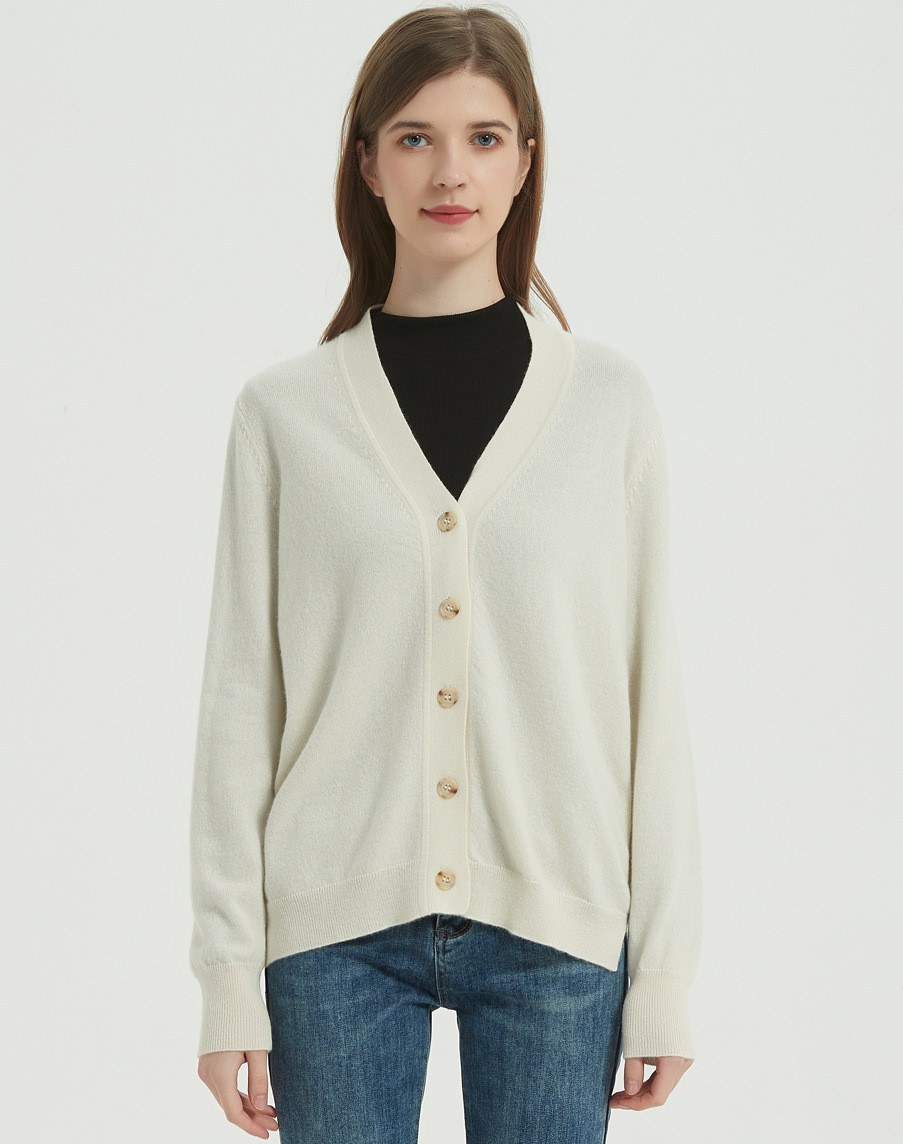
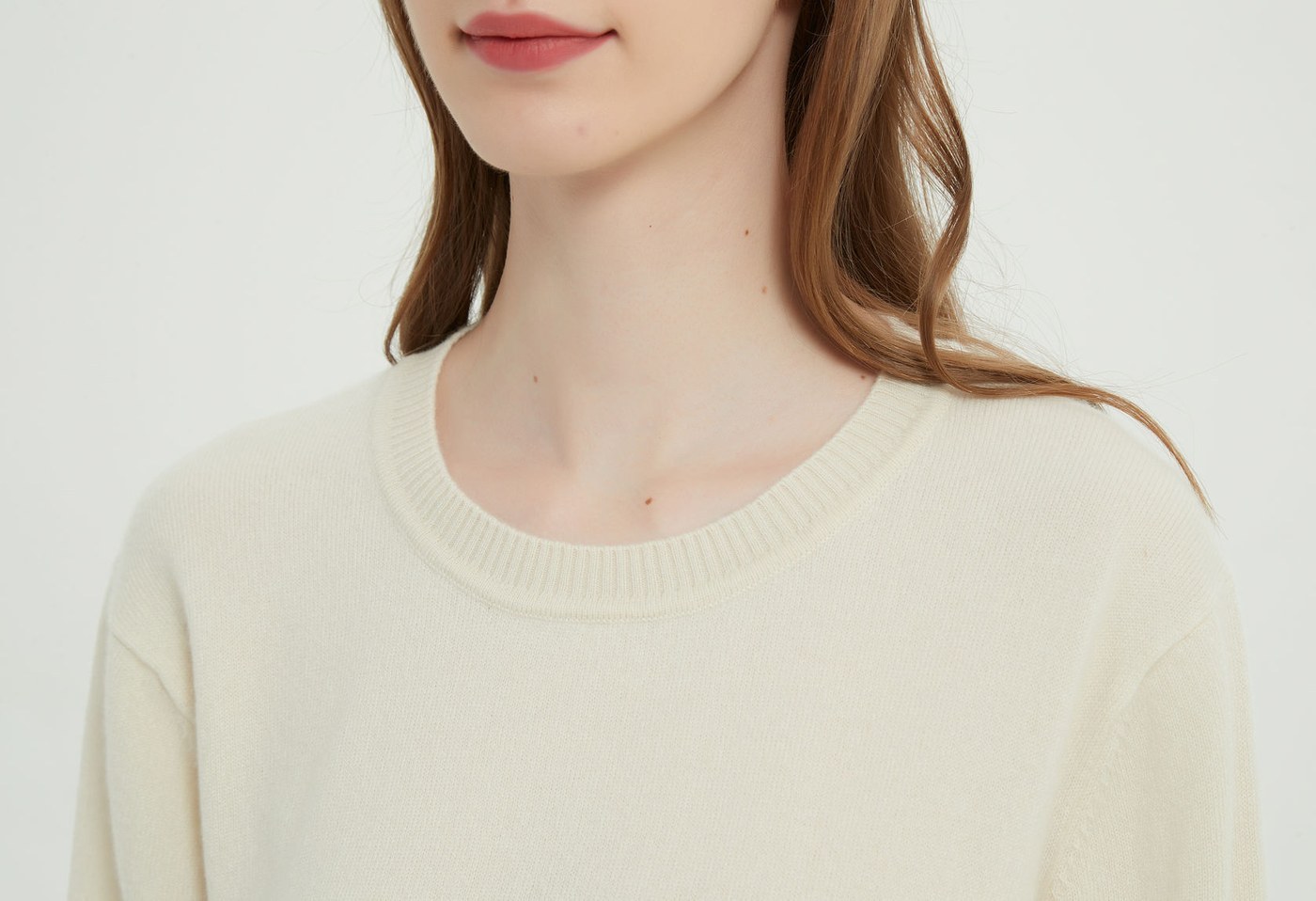
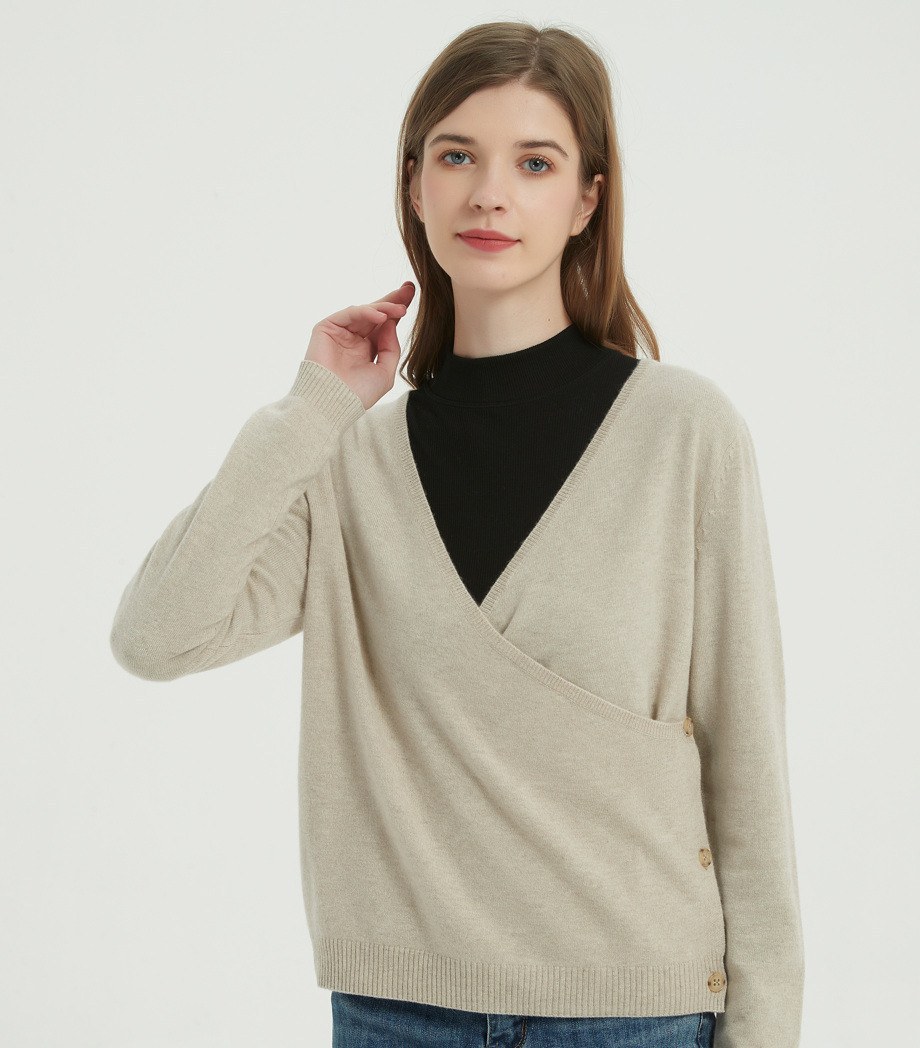
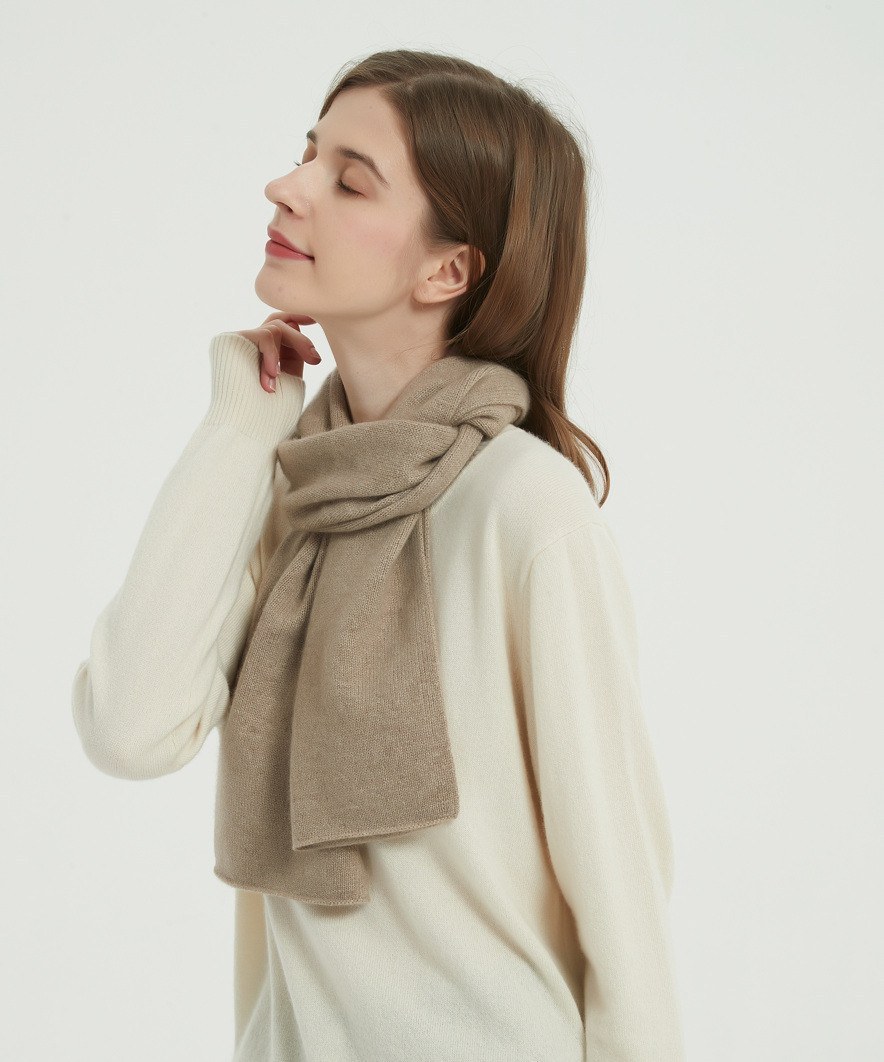
An undyed cashmere range looks like the easiest thing on a line sheet to say yes to, and that is exactly why it deserves a harder look before the order goes out. The colour arrives free — cream, grey, beige and brown grown into the fibre itself — and the marketing story writes itself. But undyed production is a sorting and grading discipline first, a finishing decision second, and a certification exercise third, and each of those layers has a failure mode a buyer only discovers after the goods land. This guide walks the three layers in the order they matter. First, what undyed cashmere actually is and where its four natural colours come from. Then the finishing routes — including where brushed cashmere fits and what the halo trades away — and finally the checks that keep a natural-colour programme honest, from shade cards to certificates. Everything below follows the same factory practice we apply to our own Pure and Natural Undyed Cashmere collection, knit in Inner Mongolia from fibre that never enters a dye bath. Undyed cashmere, also sold as natural-colour cashmere, is yarn spun from fibre that was washed, dehaired and carded but never dyed and never bleached. A cashmere goat grows its undercoat in a narrow palette — white and cream, light grey, beige and brown — and the finished garment keeps whichever of those shades was sorted into the lot. Independent guides to the fibre, such as this complete undyed cashmere primer, describe the same range: creams, fawns, greys and charcoals, with nothing added to change the colour at any stage. What it is not is a lesser grade. Colour sorting happens at the same dehairing stage as every other quality decision, and the fibre itself is judged by the same three measures as any lot: diameter, staple length and down content. The difference is upstream of quality — it is in what the fibre never meets. Conventional dyeing asks hot chemical baths to swell the cuticle scales along each hair so pigment can reach the core. Skipping that step keeps the cuticle closed, which is why an undyed swatch of the same yarn feels denser and smoother than its dyed twin, and why the colour cannot fade, bleed or drift between lots: it was never applied in the first place. Natural-colour production begins in the sorting room, not the design studio. Fibre is graded by colour family — white and cream at the light end, then light grey, beige and brown — and blending adjacent families extends the palette while staying entirely natural. White and cream fibre is the scarcest and the most versatile, which is why heritage mills guard their lightest lots; brown fibre, less common still, is typically reserved for tonal menswear and outerwear knits. European makers who work in natural fibre describe the same four-shade card, and one atelier’s fibre notes on natural cashmere colours and finishes is a useful reference for how the colour ladder is conventionally coded. Grading is also where the commercial risk hides. Because the colour comes from goats rather than chemistry, every production lot is a hand-sorted population, not a formula. Two lots of “oatmeal” can sit visibly apart if the sorting standard is not written down. This is the single most important document in an undyed programme: a signed shade standard, referenced by yarn-lot number, that both sides keep. Without it, the second order is a colour gamble; with it, the capsule stays tonal across seasons and across styles. The colour hierarchy has one more consequence worth knowing before you brief a mill. Fibre merchants grade colour alongside diameter and length, and white fibre commands the top of that scale because it suits every downstream use — a guide to cashmere colour grading explains why brown fibre is the scarcest in commercial lots and why bleaching it lighter damages the hand. For an undyed range this cuts both ways: your lightest shades are genuinely rare, and your deepest browns are the ones nobody else’s dye house can fake. The environmental case for undyed fibre is unusually concrete, because the deleted stage is the most resource-intensive one in knitwear production. Dyehouses worldwide consume on the order of five trillion litres of water a year, and dyeing and finishing together account for roughly a fifth of industrial water pollution — figures documented across textile-industry reviews, including the sustainability discussion in the undyed cashmere guide cited earlier. An undyed lot uses none of that water, none of the dye chemistry, and none of the hot-rinse and drying energy that follows every bath. There is a second, quieter benefit that matters more to professional buyers than the headline numbers: verifiability. Most sustainability claims in knitwear are proportional — “reduced”, “lower”, “responsibly managed” — and proportionality is where greenwash lives. “No dye bath” is binary. A buyer walking a factory floor can see there is no dye line; a customer reading a hangtag can understand the claim in one sentence. Among the natural-colour advantages catalogued by a natural-colour cashmere producer’s own overview, that auditability is the one a compliance department will value most. One honest caveat belongs in the same paragraph. Undyed does not mean impact-free: dehairing, scouring and transport all consume resources, and a natural colour is not automatically a certified supply chain. The claim that survives scrutiny is narrow — this garment was never dyed — and the sections below cover what can be layered on top of it with paperwork behind it. Brushed cashmere — also called raised or napped cashmere — is a finishing route, not a fibre grade. After knitting, the fabric runs against rotating rollers covered in fine wire points or dried teasel heads, which lift the loose fibre ends out of the yarn structure into a soft surface layer, the halo. The process sequence and its vocabulary are well documented in a mill’s guide to cashmere finishing stages: milling, teasing or raising, then shearing to level the nap and pressing to set the dimensions. The halo has a trade-off, and it is worth stating plainly. The fibre ends that make a brushed surface feel cloud-like are the same fibre ends that form pills in wear — brushing and pilling resistance pull in opposite directions, which is why finishing guides for buyers treat the two as a single specification decision. A detailed knitwear finishing guide to brushing, steaming and anti-pill treatment makes the critical points: never brush fine gauges aggressively, because short-staple fibre at 12GG and above breaks under the wire and sheds heavily afterwards, and always specify a conservative brush on the first sample — more can always be added in a re-finish, but nothing can be un-brushed. Because brushing is mechanical, its acceptability is measurable, and the measurement to ask for is the pilling grade on the finished fabric. The pilling test methods under ISO 12945 — Martindale, ICI pilling box and random tumble — grade surface change from 5 (no change) to 1 (heavy), and the acceptance grade belongs in the purchase order, not in a verbal promise. Guidance from a specialist cashmere atelier’s note on brushed finishes adds two rules that save rework: do not mix brushed and clean-finished panels in one garment, because the two surfaces age and wash differently, and treat brushed cashmere as a care-label category of its own — cool hand wash, dry flat, never the wool machine cycle. An undyed claim is a processing claim, and it is at its strongest when the surrounding paperwork is precise. Three certificates do most of the work. Oeko-Tex Standard 100 matters for undyed goods in a way that surprises buyers: it tests for what is absent from the finished textile, and a no-dye programme still touches washing agents, spinning lubricants and finishing aids, all of which fall inside that test’s scope. The Good Cashmere Standard, published by the Good Cashmere Standard initiative, covers the animal-welfare and herding-community side of the chain that “undyed” says nothing about. And for goods entering the United States, fibre content on the label is governed by the Wool Products Labelling Act, codified at 16 CFR Part 300 — a natural-colour sweater is still a labelled fibre product, and “undyed” on a hangtag does not relax a single labelling requirement. The narrative boundary deserves the same discipline as the fibre spec. Undyed cashmere supports three honest statements: the fibre was never dyed, the colour cannot wash out, and the programme removes a dyehouse from its own supply chain. It does not, by itself, prove traceability to a specific herding region, animal welfare, or fair pay — those are separate certificates. Retailers who keep the three layers distinct in their copy are the ones whose sustainability claims still read as credible in 2027; the ones who blur them are the ones who get asked for evidence they do not hold. Natural-colour production is a sorting discipline, and the checks that separate a programme from a gamble are the same ones our own team runs before quoting: One planning advantage is easy to miss: deleting the dye stage compresses the calendar. Yarn that is already the right colour moves straight from spinning to winding and knitting, so an undyed programme ships on the same two-to-four-week cadence as core knitwear — with the dyehouse’s lot-booking queue removed entirely. For buyers layering undyed basics alongside a dyed fashion range, that timing difference is often what makes the capsule work as a year-round program rather than a seasonal experiment. Styling-wise, the undyed capsule earns its shelf space next to a dyed range rather than instead of one. The natural tones are the coordination layer — a men’s cashmere sweaters line can carry an oatmeal crew as its year-round basic while seasonal colours rotate around it, and a cashmere cardigan or cashmere scarf programme can hold one brushed accessory per season as the texture piece. No. There are four natural colours — cream/white, light grey, beige and brown — and blending adjacent families extends the palette while staying entirely undyed. The lightest creams are the scarcest lots; deep natural brown is the shade a dyehouse cannot fake. It is measurable. Dyeing asks hot chemical baths to swell the cuticle scales of the fibre; skipping the dye bath leaves them closed. Buyers feel the difference immediately in side-by-side samples of the same style in dyed and undyed yarn. No. The pigment sits inside the fibre rather than on it, so there is nothing to wash out and nothing to transfer onto other garments. Shade consistency between production lots is governed by fibre sorting, which is why the shade standard belongs in the purchase order. Brushing is a finishing decision independent of colour, and the same rules apply: conservative brush passes on the first sample, no aggressive brushing at fine gauges, and a pilling grade specified on the finished fabric. On undyed programmes we typically keep sweaters clean-finished and put the heavy brush on scarves and accessories. Yes — the four natural tones are coordination colours that pair with virtually any dyed palette. Many retailers run undyed basics year-round alongside seasonal dyed fashion styles, with one brushed natural accessory per season as the texture piece.
1. What Undyed Cashmere Actually Is — and What It Is Not
Property
Undyed cashmere
Conventionally dyed cashmere
Colour source
Pigment grown in the fibre
Dye bath, applied after scouring
Cuticle surface
Intact — smooth, closed scales
Swollen and lifted by dye chemistry
Shade repeatability
Governed by fibre sorting and lot blending
Governed by dyehouse lot control
Colour permanence
Cannot fade or bleed — nothing to wash out
Subject to fading and lot drift over time
Shade range
Four natural colours, plus blends of adjacent shades
Full commercial palette
2. The Shade Card: Four Colours, One Sorting Discipline
3. What Skipping the Dye Bath Removes
4. Brushed Cashmere: Where the Halo Comes From and What It Trades
Finishing route
Surface result
Best suited to
Watch item
Clean-finished (washed, milled, pressed)
Compact, stitch definition visible
Fine-gauge crews, tanks, layering
Pilling grade is the natural strength here
Light brushed
Soft halo, warmth without weight loss
7GG crew necks, scarves, beanies
Request pilling test on the brushed fabric, not the greige
Heavy brushed
Deep fleece-like nap
Coarse-gauge throws and winter accessories
Fibre breakage; durability drops if overdone
Teasel-raised (traditional)
Laid-in-one-direction lustre
Premium scarves and wraps
Slower and skill-dependent; check nap evenness in raking light
5. Certification: What Paperwork Can and Cannot Prove
6. Five Checks Before You Commit to an Undyed Programme

7. Planning the 2026/27 Undyed Capsule
Planning item
Typical specification
Notes for the brief
Natural colourways
Cream, light grey, beige, brown
Light shades are scarcest; book the yarn lot early
Fibre specification
15–16 micron, 36–40 mm staple
Batch lab certificate with the order
Yarn constructions
2/26 and 2/36 Nm pure cashmere; wool-cashmere blends for structure
A wool-cashmere ground holds shape in open-cardigan blocks
Super-light pieces
2/48–2/60 Nm at 14–16 GG
Super-light cashmere layers read best in the lightest natural shades
Finishing routes
Clean-finished for sweaters; light brush for accessories
Pilling grade specified on finished fabric
Production lead time
2–4 weeks after sample sign-off
No dyehouse queue in the critical path
Wholesale Undyed Cashmere FAQ
Does undyed cashmere only come in beige?
Is undyed cashmere really softer, or is that marketing?
Will the colour fade or bleed over time?
Can we brush an undyed sweater the same way as a dyed one?
Can undyed styles sit inside an existing dyed collection?