Mens Sweater Manufacturers in China: How to Vet Capacity and Claims
- Share
- Issue Time
- Nov 12,2026
Summary
A buyer's guide to vetting mens sweater manufacturers in China: how men's fit blocks test pattern engineering, the three construction routes, gauge-locked capacity maths, in-house versus outsourced dyeing, finishing quality, the test reports that back a claim, and the inspection terms that make promises enforceable.
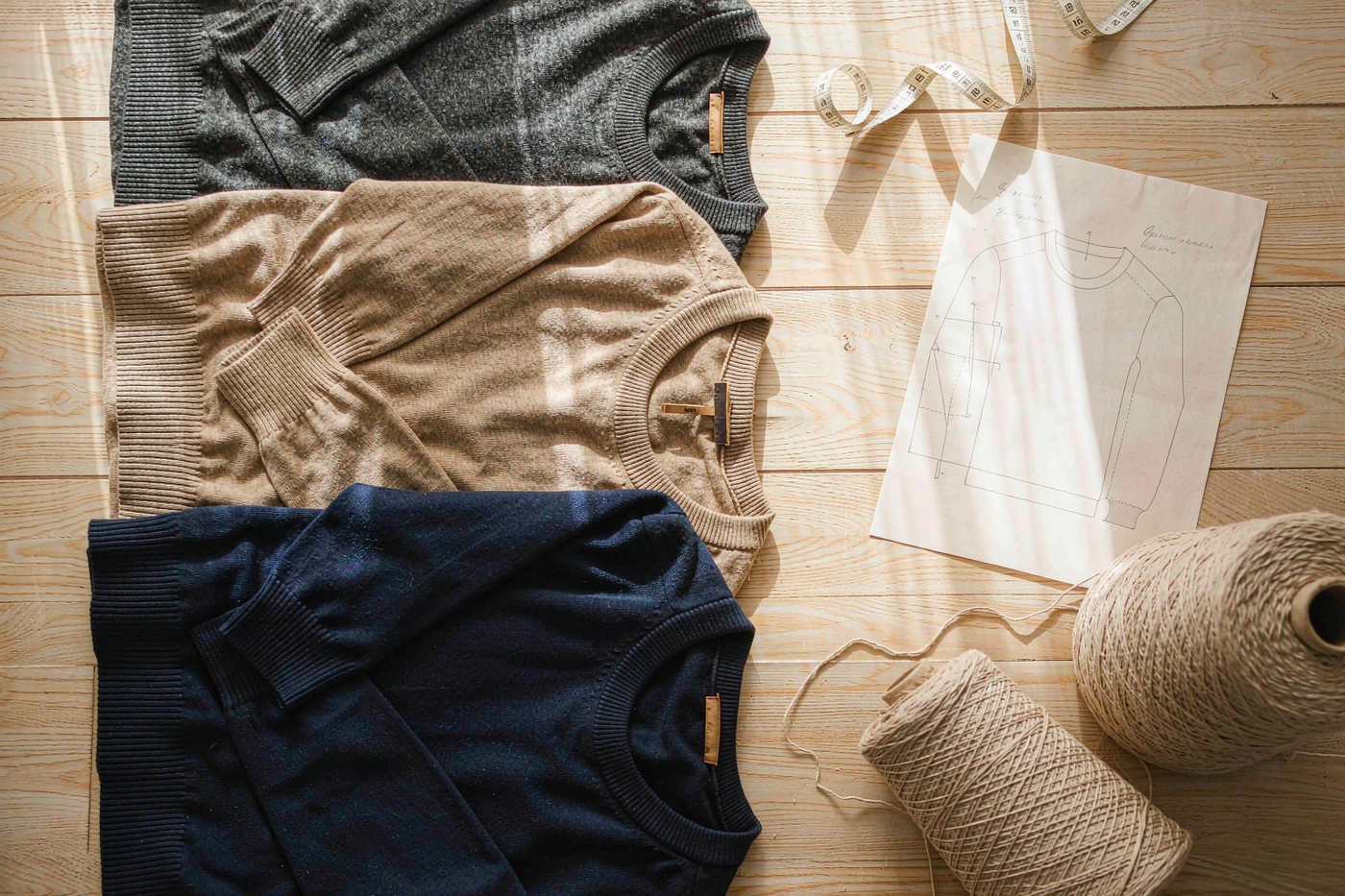
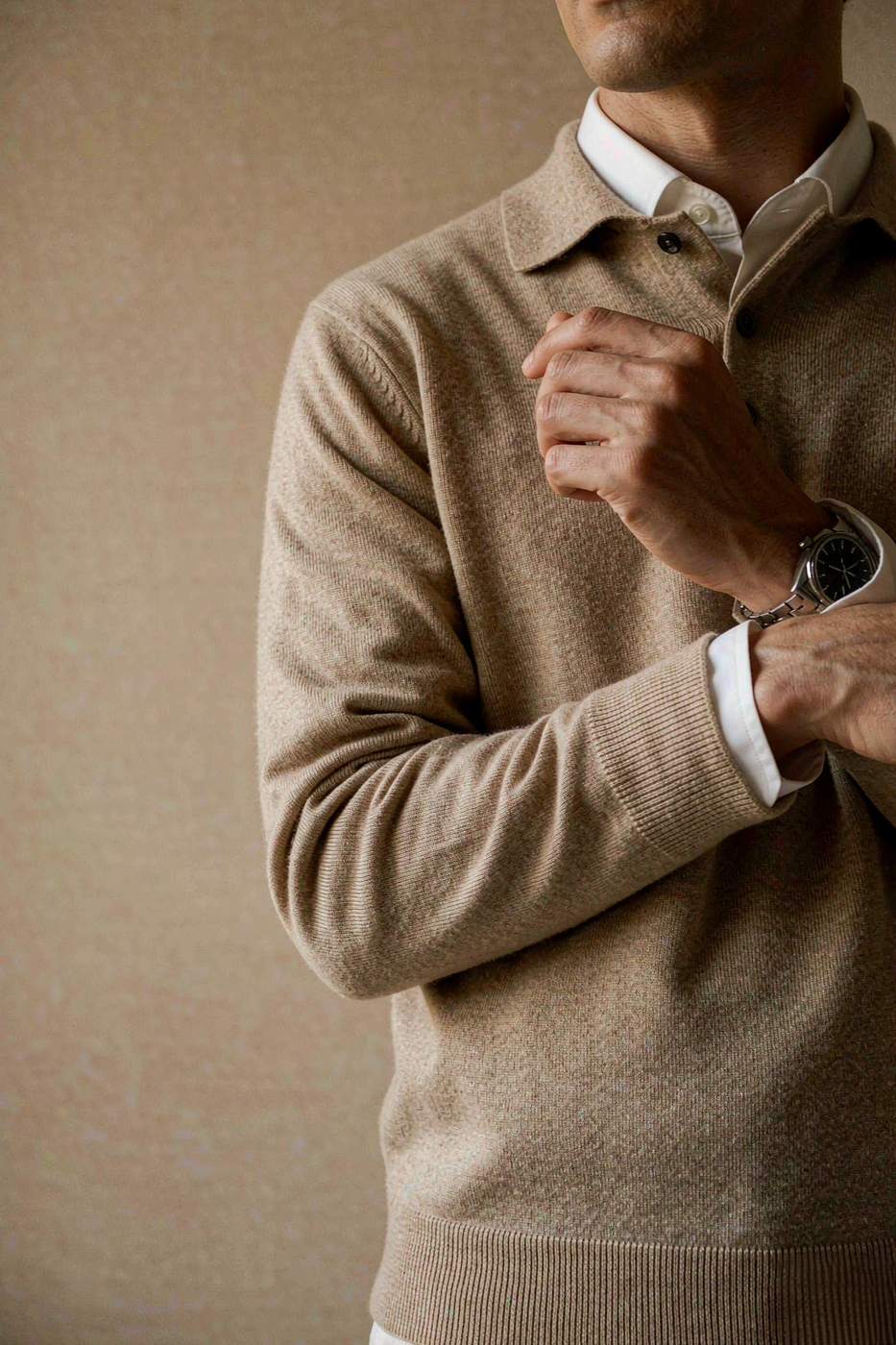
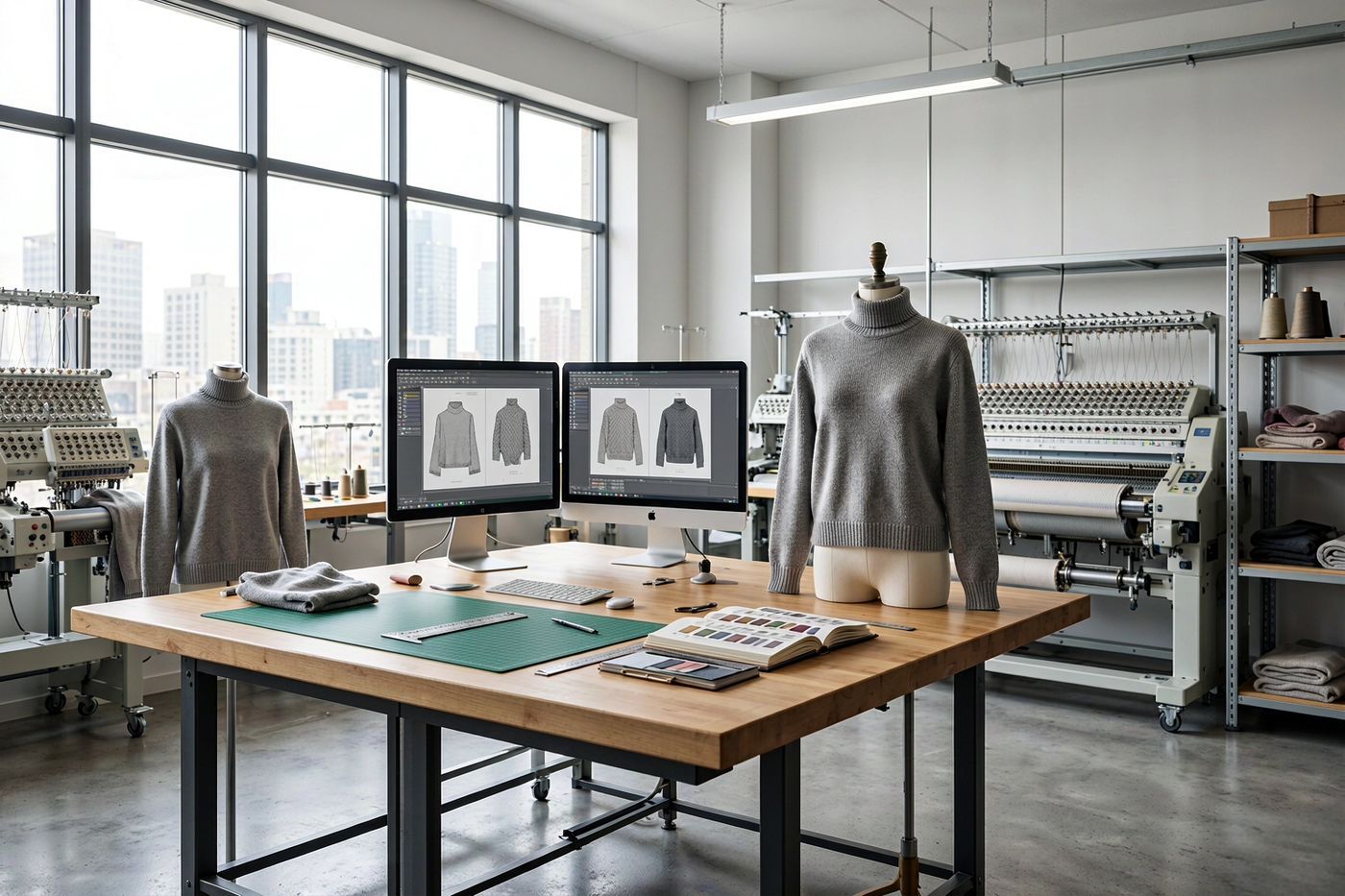
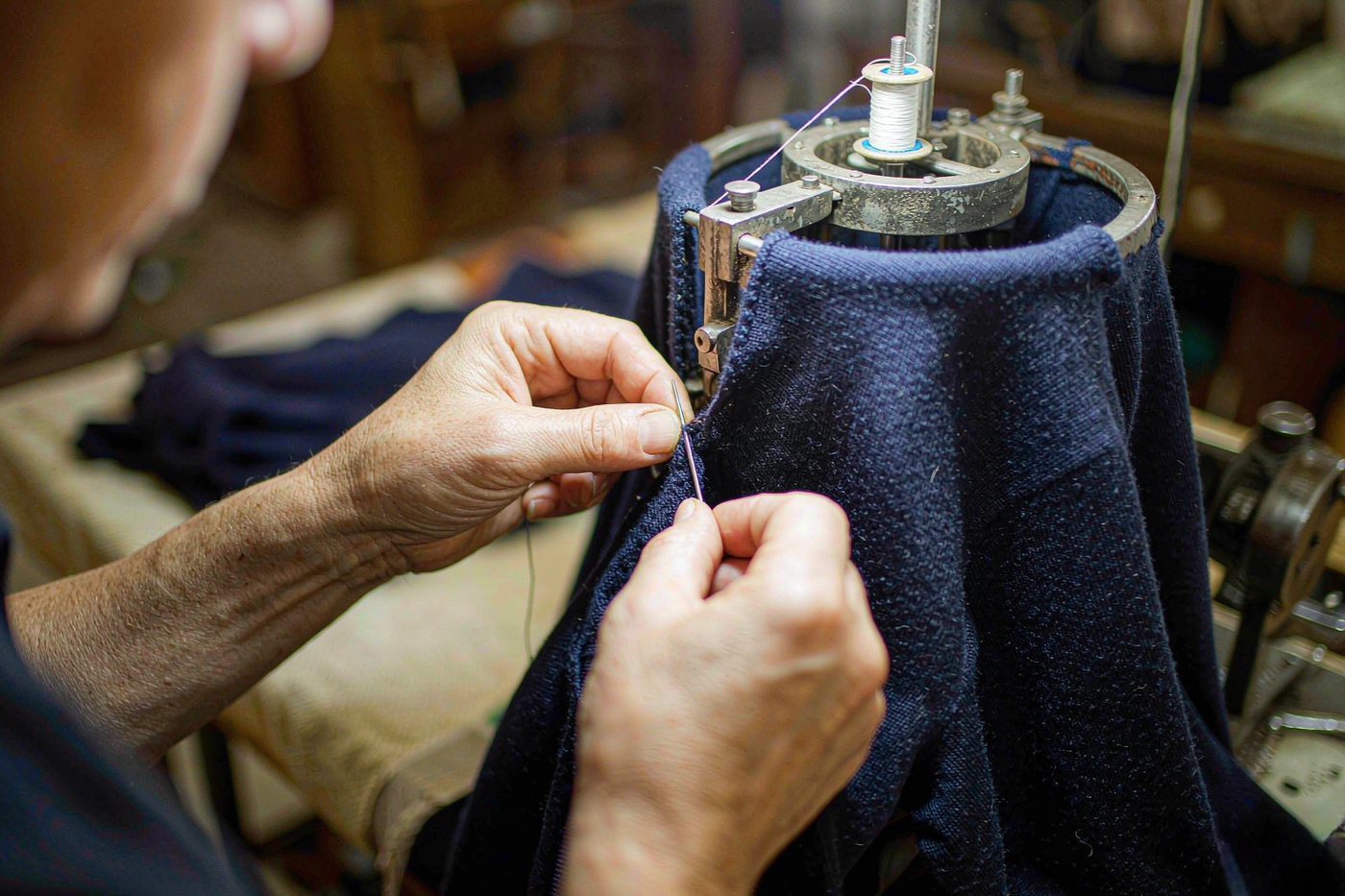
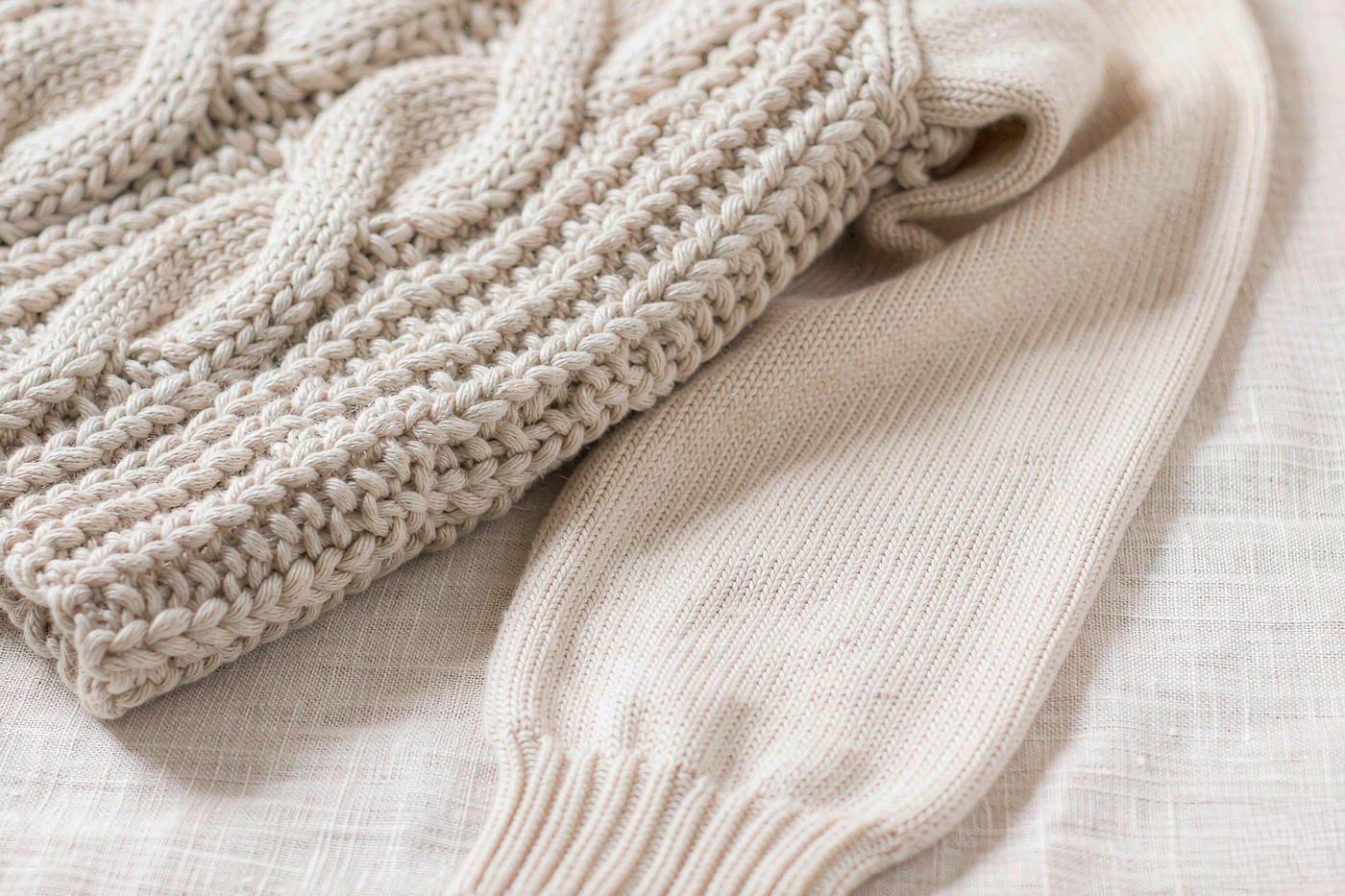
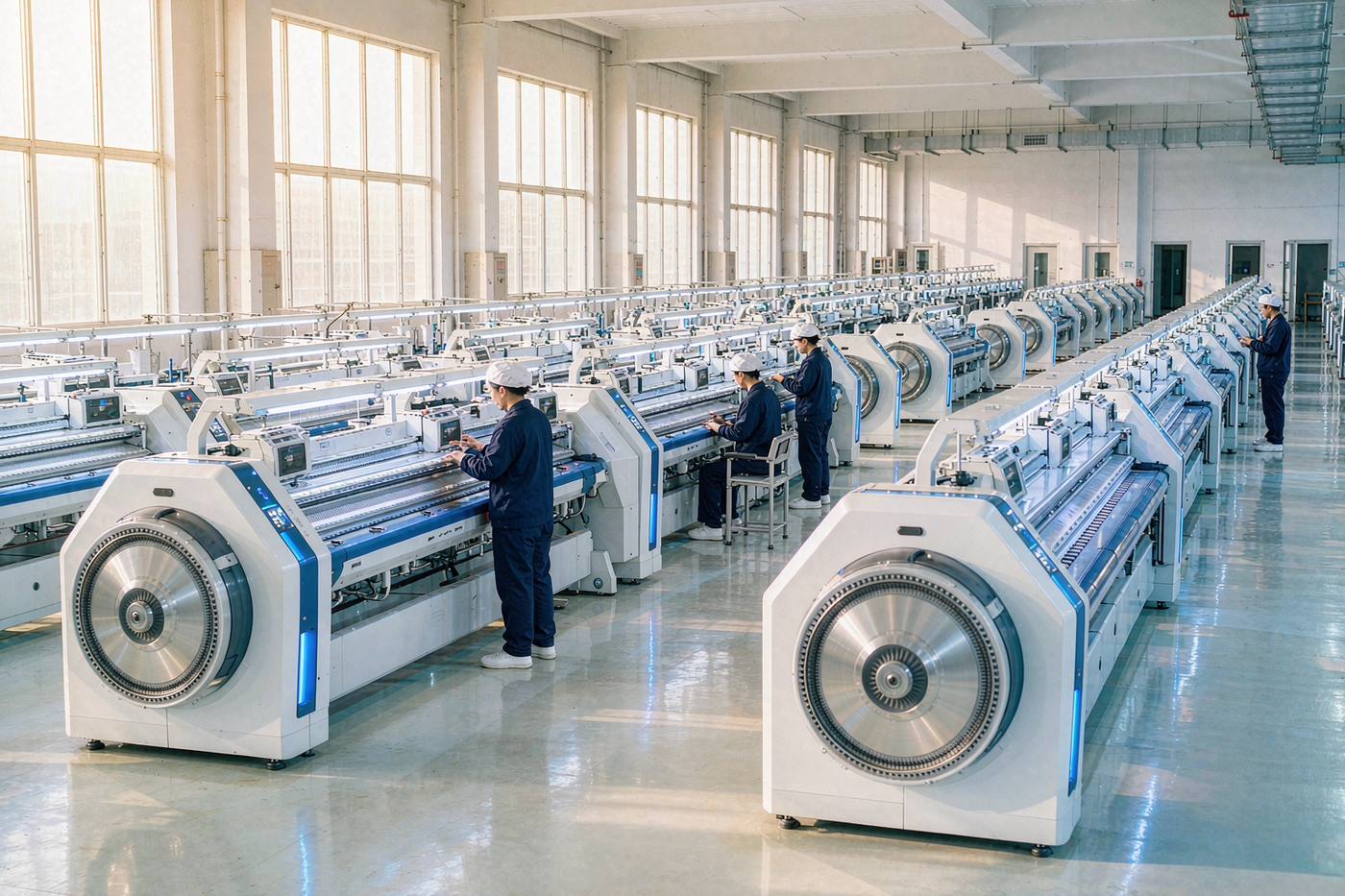
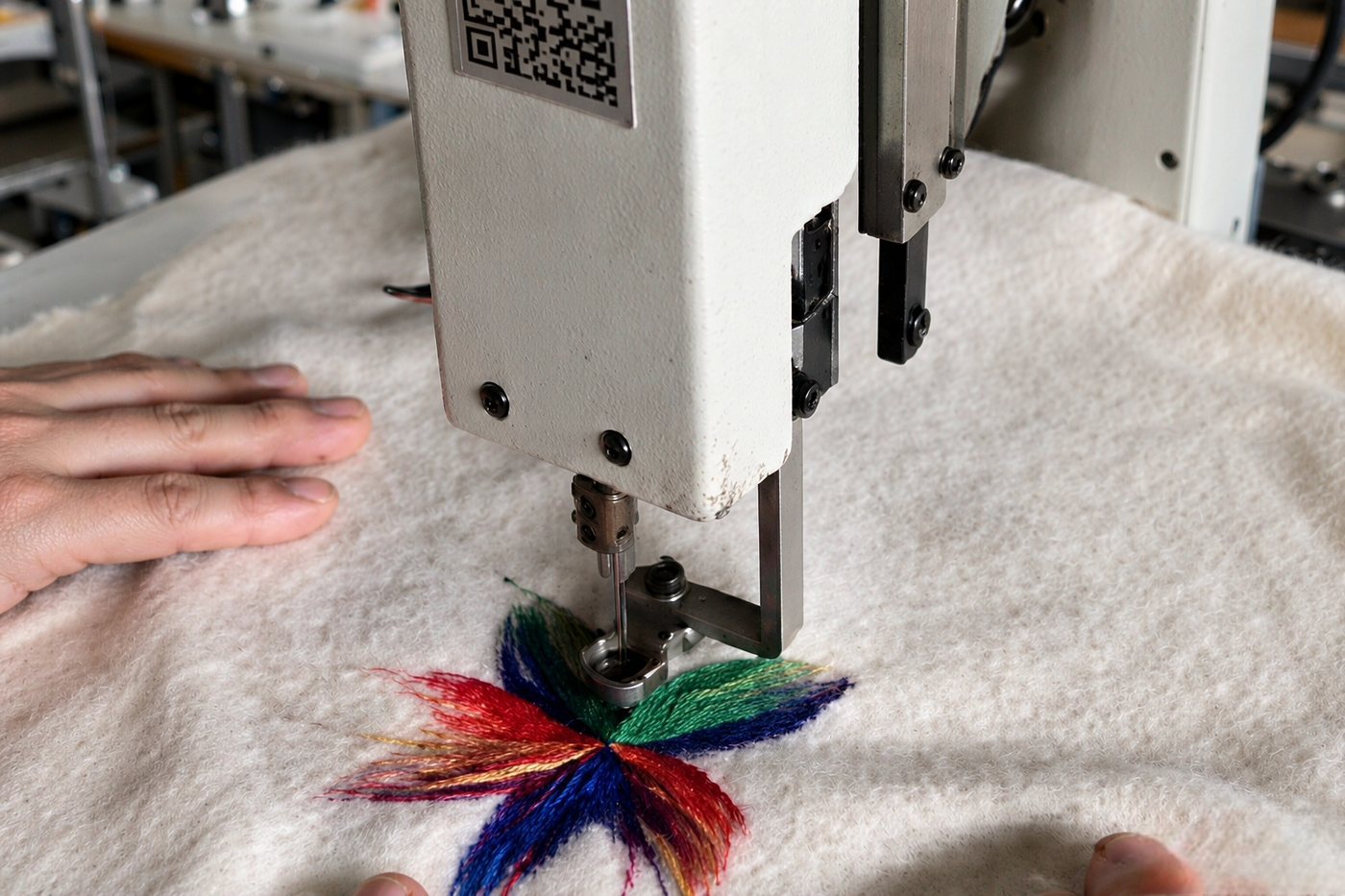
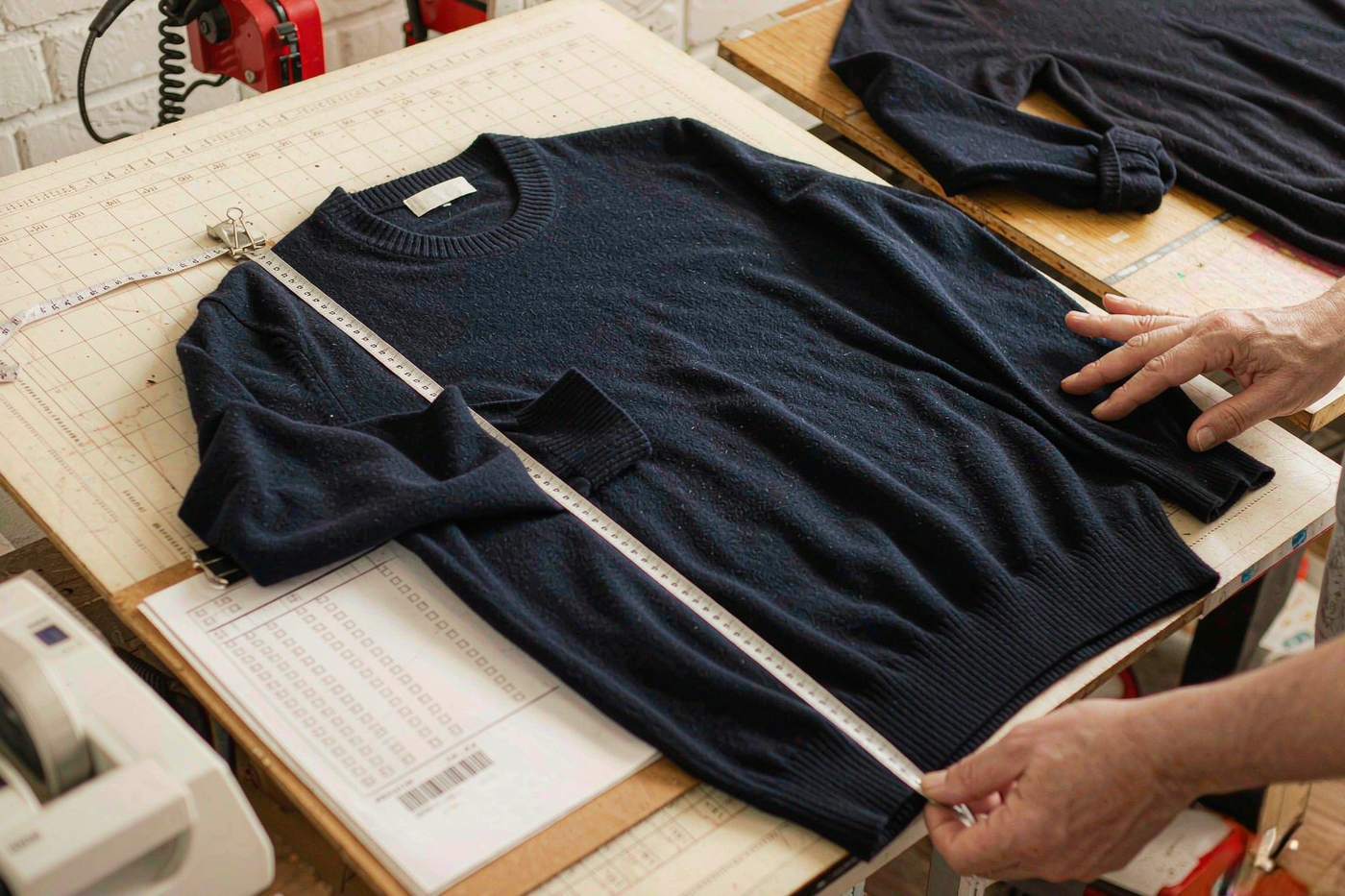
Men's knitwear is quietly becoming the growth engine of the cashmere category. Fashion data cited in trade coverage shows premium yarns such as cashmere now account for roughly a third of knitwear sell-outs at luxury retailers, and the pieces driving it — rollnecks, half-zips, fine crews, knit polos — are overwhelmingly men's staples rather than seasonal novelty men's cashmere demand and styling data. For a buyer, that shifts the question from whether to add a men's programme to which factory can hold one together. Search for men's sweater manufacturers and every listing claims the same things: full gauge coverage, in-house dyeing, fast bulk delivery. Industry buying guides answer that fog with a short verification list — check the gauge range actually on the machine floor, the minimum per style and colour, whether certificate scope covers your product, and whether an AQL-based inspection plan exists in writing how buyers verify Chinese sweater factories. Everything in this guide is that principle applied section by section: a claim, the evidence that should sit behind it, and the question that surfaces the difference. The sections below walk the whole chain: why a men's brief stresses a factory harder than a women's one, the three construction routes and what each proves, how gauge locks capacity, the arithmetic that turns machine counts into delivery dates, dyeing routes, finishing quality, the test reports that support a specification, and the inspection terms that make all of it enforceable. Browse the men's cashmere sweater range in parallel — the bodies there are the reference silhouettes a factory should be able to reproduce in your own yarn and measurements. A men's sweater leaves less room for improvisation than a women's one. The shoulder is defined, not dropped; the fit lives or dies on a set of measurements that all interact. Technical knitwear references treat shoulder construction as the first decision because it determines which measurements control fit: a set-in sleeve needs shoulder width, shoulder slope, armhole depth, sleeve-cap height and bicep width to agree with each other; a raglan is governed by yoke depth and neckline distribution; a drop shoulder trades the armhole for body width and sleeve-join position the four shoulder constructions compared. Factory-side engineering guides put the human shoulder slope at roughly 15–22 degrees, flag that rib tension must run tighter than body tension or hems flare, and note that a back neckline sits higher than the front while a V-point needs mirrored narrowing to stay symmetric panel construction and pattern engineering. That is why the men's brief is a good audition. Ask a candidate factory for a men's size set in a classic crew — S through XXL — washed and finished, with post-wash measurements listed against the size chart. A workshop that mostly cuts oversized women's blocks will reveal itself in the shoulder: cap heights that bunch, sleeves set with a pitch that swings forward, collar ribs that recover unevenly after washing. Grading is the second tell: sizing a men's run from S to XXL means re-programming narrowing points across five sizes, not scaling one panel, and the factories that do it well keep the record — construction sketch, measurement sheet per size, wash condition — for every style they have run. Every sweater leaves the factory by one of three routes. Cut-and-sew starts from knitted fabric cut into pattern pieces and stitched. Fully fashioned knitting forms front, back and sleeves close to their final outlines on the machine, then joins them — usually by linking, a loop-by-loop seam — and the shaped edges leave faint diagonal fashioning marks that let you verify the route on the finished garment. Whole-garment knitting produces the piece complete in three dimensions with no panel joining; WHOLEGARMENT is Shima Seiki's trademark for its seam-free system, first shown at ITMA in 1995, and other integrated systems use different names fully fashioned versus cut-and-sew versus whole-garment. The routes carry different proofs. Procurement-side comparisons put fully fashioned knitting first for shaped silhouettes and mid-size runs because it gives precise shaping and broad yarn and gauge access, whole-garment first for assembly-free comfort where the design fits the machine's constraints, and cut-and-sew first for very large volumes of simple blocks; the same comparison notes that premium and mid-range programmes usually choose fully fashioned while promotional items accept the seams of cut-and-sew a procurement guide to fully fashioned manufacturing. On a men's crew or V-neck — garments bought on shoulder line and collar recovery — the route matters more than on a boxy unisex knit. A factory whose only honest answer is cut-and-sew is telling you its machine floor cannot shape panels, and you should hear that clearly before the first sample, not after it. Gauge — needles per inch on the flat bed — decides what a factory can physically knit. Factory benchmark data maps the bands directly: 3GG for chunky outerwear knits, 5GG–7GG for mid-weight sweaters and cardigans, 9GG–12GG for lightweight sweaters and knit polos, 14GG–18GG for fine-gauge layering, with finer gauges consuming more machine time per piece gauge-to-product benchmarks from a flat-knit factory. The claim to check is not the widest number on the website but the split: how many beds sit in each band, and what bed widths are available, because a long men's panel in a large size needs the width to knit it in one piece. Capacity researchers are blunt about why the split matters: flat-bed machines are locked to their gauge, so an order needing 12-gauge production runs only on 12-gauge machines no matter how many 5-gauge beds stand idle, and “two hundred knitting machines” says very little until you know how the count divides across gauges and how that division matches the order book how capacity is calculated and overbooked in sweater plants. Cluster-level listings show what a serious floor looks like — the Dongguan Dalang knitting cluster alone runs thousands of computerised flat beds spanning 3GG to 16GG inside the Dongguan cluster — but your factory's own machine list, gauge by gauge, is the document that turns that claim into evidence. Ask for it by email, and ask what share of each gauge band is already committed when your delivery window would run. Capacity claims fail because they quote one number for what is really a sequence of sections. Production-planning research defines sweater capacity as machine-minutes converted through each style's standard minute value: weekly piece capacity equals available machine-minutes multiplied by machine efficiency and divided by the minutes a style consumes, with real capacity further reduced by maintenance, shift structure and operator availability — and the whole plant capped by whichever section is slowest the capacity formula and its failure modes. Machine-level ranges give you the raw inputs: a computerised flat bed produces roughly 30 to 50 standard sweaters in 24 hours at mid-gauge, with shaped seamless garments running 25 to 80 pieces per machine-day depending on size and stitch density daily output ranges by knitting machine type. The table is deliberately optimistic — it counts only knitting, and knitting is rarely the bottleneck. Linking benches, wash capacity, dryer and steam-finishing throughput all sit downstream, and a floor that knits 300 bodies a day but finishes 150 is a two-week delivery pretending to be one. Published factory benchmarks bracket what a healthy programme looks like: sampling 15–25 days from a confirmed tech pack, bulk 30–45 days after approval, and minimums set per style and per colourway — typically 30 pieces per colour and 50–100 per style across a range MOQ and lead-time benchmarks. When a quote promises materially faster bulk than that on a new style with fresh dye lots, the promise is the red flag. Dyeing is the quiet half of every delivery promise. The route splits two ways: yarn is dyed before knitting, or garments are dyed after — and either way the colour work runs through a lab-dip round before bulk, which is why staged approval processes build lab dips and pre-production samples into the timeline as fixed checkpoints staged approvals: lab dips and PPS. Whether the machines are inside the factory or at a partner dyehouse matters less than the management around them: who owns the shade standard, how lot-to-lot continuity is recorded, and how quickly a dip round turns. Men's programmes make this easier and harder at once. The core wardrobe shades — navy, charcoal, camel, oatmeal — are knit-down standards most mills hold, so a range built on them shares one yarn buy across styles. The difficulty arrives with the fashion shade of the season: each additional colour is a separate dye lot with its own minimum weight at the mill, and a late addition usually resets both the yarn calendar and the shade-approval round. Verification questions: is dyeing in-house or at a partner, how many lab-dip days are quoted, whether the factory keeps physical shade bands per lot, and who signs off a match — a spectrophotometer reading beats a daylight lamp opinion, but either way the record should exist before bulk yarn is released to the floor. Washing is where knitwear becomes itself: the relaxation bath lets stitches settle to their final dimensions, which is why engineering guides insist panels be programmed with predicted shrinkage so post-wash measurements land inside tolerance, and why trim tension — tighter than the body, or hems flare — is checked on the finished garment rather than the panel trim engineering and shrinkage control. After the bath come drying, steam pressing, mending of knitting defects and final measurement. Quality comparisons keep pointing at the same human bottleneck: fully fashioned construction demands skilled linking, and post-wash measurement discipline decides whether bulk matches the approved sample linking skill and post-wash control. On a men's set-in crew, the shoulder seam is the place to look — linking lines should meet without puckering, and the seam should sit flat after wash, not just on the sample board. Value-added finishing — embroidery, brushing, anti-pilling treatments, special washes — is legitimate, but every addition extends the route and adds a failure mode: embroidery tension on a fine fibre, brushing depth on a lightweight jersey. Ask the finishing questions as specifically as the knitting ones: is washing in-house or outsourced, how many menders work the floor, and can the factory show a post-wash measurement sheet from a recent bulk lot alongside the pre-wash one. A factory proud of its finishing answers with numbers; a factory hiding it answers with a tour. A men's cashmere programme lives on repeat purchase, so the claims that matter are durability claims, and durability is testable. Procurement guidance names the working set: shrinkage to ISO 6330 or AATCC 135, pilling to ISO 12945-2 or ASTM D4970, and an AQL-based final inspection plan under ISO 2859-1 sampling the testing stack for knit programmes. Pilling deserves a word of its own because it is the complaint that kills repeat orders: the standard methods tumble swatches against controlled abrasion and grade the result on a five-point scale, and understanding what the grades mean lets you write a pass level into the contract instead of arguing after delivery how pilling tests are run and graded. Colourfastness to washing and to light rounds out the set on any dyed range. Two discipline points turn reports from decoration into evidence. First, scope: a certificate is only worth its scope line, so the document must cover your product and yarn lot, not a sister sample from another buyer's programme — buying guides make certificate scope one of the four core verification checks for exactly this reason certificate scope as a core check. Second, timing: measurement stability and pilling targets should be validated on the actual yarn before bulk knitting starts — a small step up front that prevents the outcome nobody budgets time for, reworking a finished consignment. Ask for sample reports with the scope lines visible, and ask which lots they belonged to. Verification ends in paperwork that survives disagreement. The baseline is a written inspection plan at AQL 2.5 for major defects under ISO 2859-1 sampling, run as a pre-shipment inspection on packed cartons — the same four-check framework buying guides recommend for any Chinese sweater source the four checks, restated. Around it sit the terms that make the rest enforceable: a measurement chart with tolerances agreed in centimetres, a three-stage approval path (fit sample, pre-production sample, first-production pull), a no-unapproved-subcontracting clause, a shade-tolerance band, and an on-time delivery figure the factory will be measured against. Modern floors make this easier to trust — hanging systems wired into production tracking let a factory answer “where is my order today” with a fact instead of a reassurance production tracking as a reliability signal. Before any of that, run the 45-minute call. Ten questions, answered with numbers: A factory that answers those ten in one call with figures, names and documents has already separated itself from the listings. A factory that answers with adjectives needs a longer conversation — or a smaller first order. When you are ready to test the answers against a real programme, contact us with your size range and palette; the factory page shows the machine floor, CAD room and finishing lines behind every figure above, the 2026 collection hub shows how men's bodies sit inside a full range, and the buyer FAQ covers the short questions before the first call. For range-building context, the cardigan range, vest selection and fine knit T-shirts show how far classic men's bodies carry a collection — the same bodies this guide asks a factory to reproduce to your measurements. The count matters less than the split. Machine tiers are a rough screen — a few dozen beds serve small batches, 100–300 covers mid-size programmes, larger floors serve sustained export volume — but capacity is locked per gauge band, so a factory with 200 machines cannot run a 12GG order on idle 5GG beds. Ask for the machine list by gauge, bed width and age, and match it to your style's gauge before believing any monthly figure. Most men's programmes live between 7GG and 14GG: mid-weight crews, V-necks and half-zips at 7GG–9GG, fine layering and knit polos at 12GG–16GG, with 3GG–5GG reserved for chunky accent pieces. A factory covering 5GG–16GG on real beds can carry a full men's range; a factory whose fine gauges exist only on the website will quietly push every style toward what its floor can knit. Specify fully fashioned for tailored men's silhouettes — set-in crews, V-necks, structured cardigans — where shaped panels and broad gauge access matter, and whole-garment for seam-free minimal designs that fit the machine's constraints. Cut-and-sew suits simple blocks at high volume but sacrifices shoulder precision. You can verify the route on the garment: fully fashioned panels leave faint diagonal fashioning marks along shaped edges. Three checks cover most of it: a video walk-through of the machine floor showing gauge plates and running order, a written machine list by gauge and age, and the finishing capacity quoted separately from knitting. Then cross-check the promise against published benchmarks — sampling in 15–25 days and bulk in 30–45 after approval is the healthy band; anything dramatically faster on a new style with fresh dye lots deserves suspicion, not applause. The working set: fibre composition for the yarn lot, shrinkage to ISO 6330 or AATCC 135, pilling to ISO 12945-2 or ASTM D4970, and colourfastness to washing and light — each scoped to your style and lot, not a generic certificate. Measurement stability and pilling targets should be validated on your actual yarn before bulk knitting starts, and the pass levels should be written into the purchase terms so the final AQL inspection has something objective to measure against.
Why a men's brief tests a factory harder
Three construction routes, and what each one proves
Gauge: read the machine floor, not the catalogue
Capacity maths: from machine count to a delivery date
Step Assumption Result Style 12GG plain men's crew, ~30–35 min knitting per body — Per machine 24 h day at ~80% real efficiency 16–18 bodies 20 machines dedicated to the gauge band ~300 bodies/day Monthly 22 working days, minus style changes ~6,000 pieces Order check 3,000 pieces, one colour ~10–11 knitting days Dyeing: in-house or outsourced decides your calendar
Finishing: where cashmere quality actually shows
Test reports: which documents actually support a claim
Inspection terms and the 45-minute vetting call
FAQ
How many knitting machines does a credible men's sweater factory need?
What gauge range should a men's cashmere programme cover?
Fully fashioned or whole-garment — which route should I specify?
How can I sanity-check a capacity claim without visiting the factory?
Which test reports should accompany a bulk delivery?