Cashmere Sweaters for Women: A Wholesale Supplier's Fit and Size Guide
- Share
- Issue Time
- Nov 17,2026
Summary
A wholesale buyer's guide to cashmere sweaters for women: the POM measurement sheet, ease bands by silhouette, knit grade rules per size, US/UK/EU letter drift, size-ratio carton packing, tolerances, plus sizes and the size set that gates bulk release.
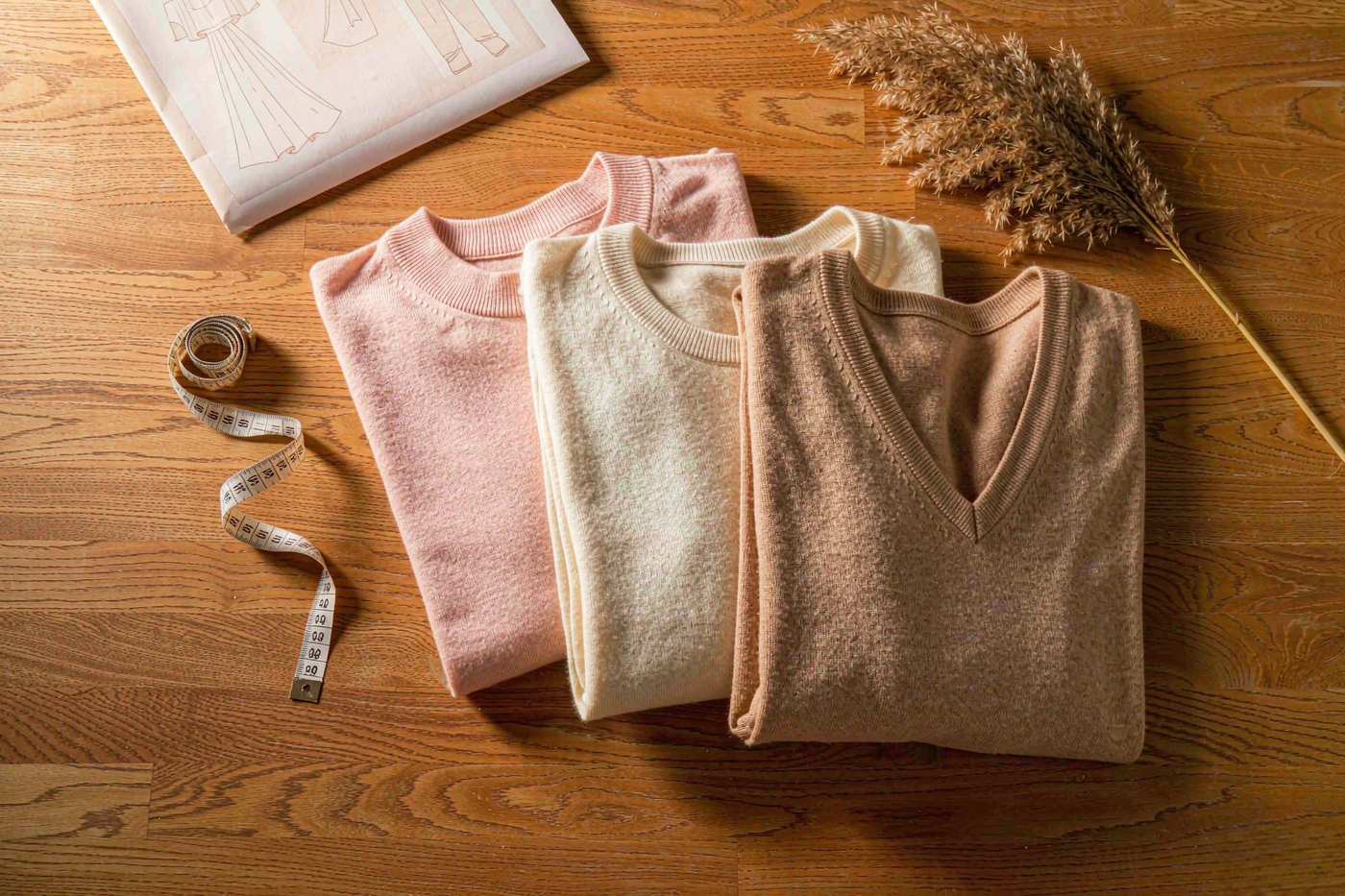
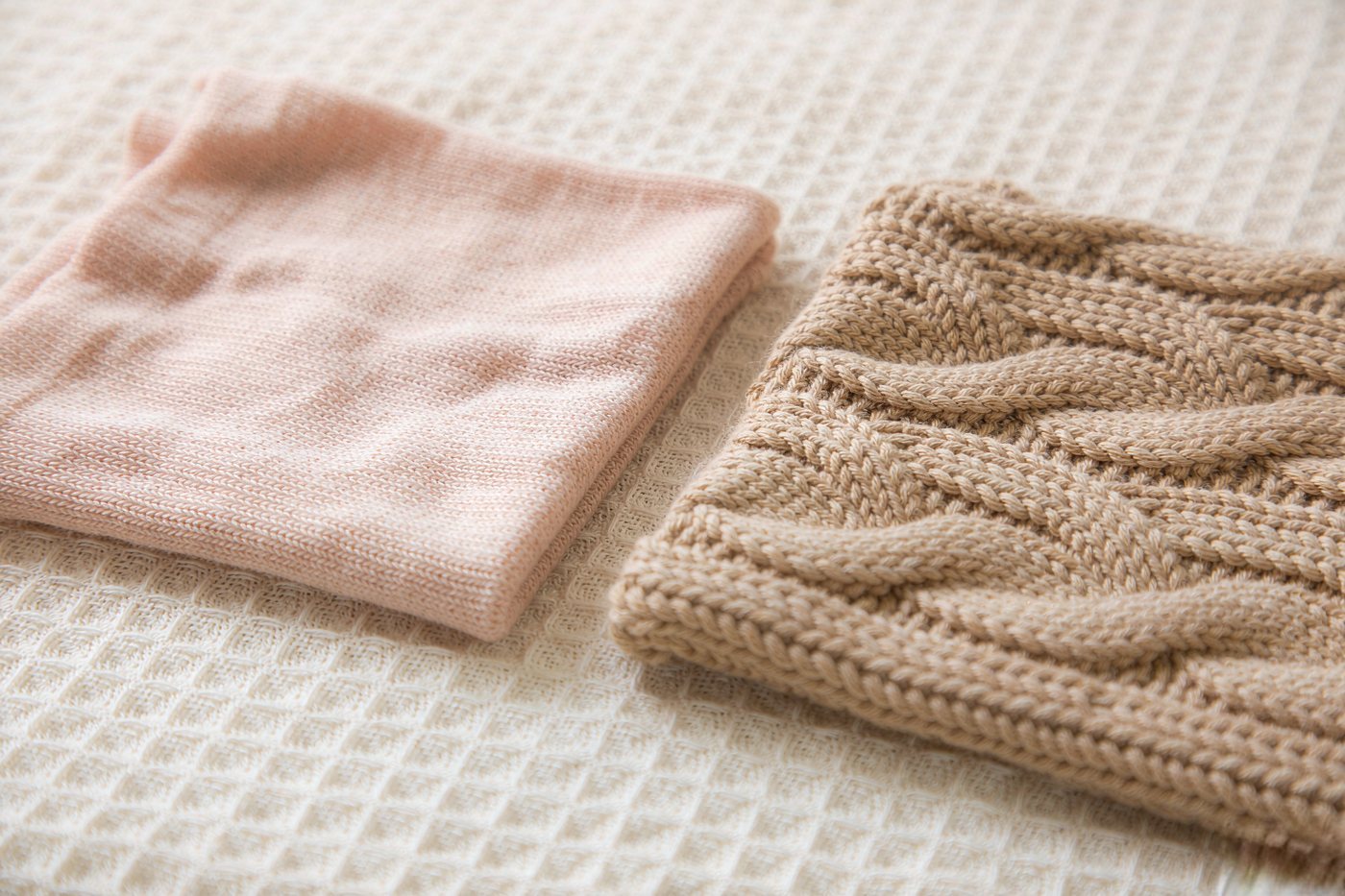
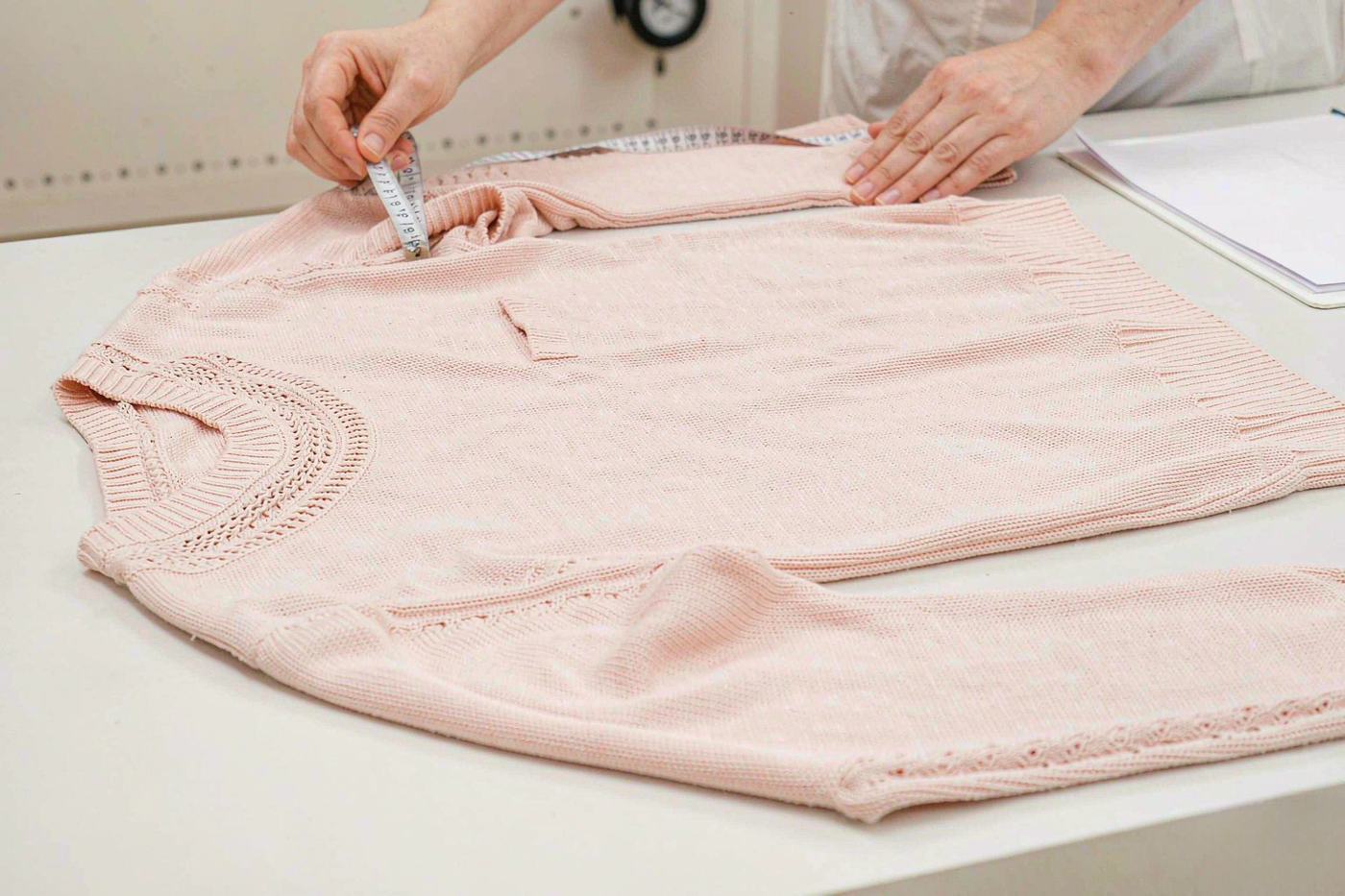
Searches for cashmere sweaters for women are the widest entry point into the knitwear category — tens of thousands of monthly lookups and rising, more than double the volume of most men's equivalents. But width of demand brings a specific risk for wholesale buyers: women's programmes run the broadest size ranges, the most silhouette variation and the least tolerance for a wrong fit. Industry sizing analyses consistently place inconsistent fit among the leading reasons for apparel returns — in some surveys 30–50 percent of all returns trace back to size international sweater size grading standards compared. This guide covers the fit and size side of a women's cashmere programme: the measurement sheet a factory should work from, how ease is engineered, how grade rules scale a sample into XS–XXL, how US, UK and EU letters diverge, how size ratios are packed, and what to lock with a supplier before bulk knitting starts. Browse the women's cashmere sweater range in parallel as you read — the bodies there, from slim crews to relaxed cardigans, are the reference silhouettes every figure below should reproduce in your own yarn and measurements. A men's programme can live on three or four blocks. A women's range rarely does: the same collection usually spans slim layering knits, classic crews and oversized cardigans, each with a different ease intention, and each sized XS through XXL or beyond. Knitwear fitting guides classify at least five ease bands, from garments that stretch against the body to oversized cuts with fifteen centimetres or more of added room sweater size charts and ease categories. Every one of those silhouettes needs its own grade rule set, or the range drifts: the slim crew turns boxy by XXL while the relaxed cardigan turns shapeless. Two more factors widen the gap. First, measurement conventions differ by gender — many brands measure women's sleeve length from the shoulder seam, while men's is often measured from the centre back neck, so numbers copied between spec sheets silently mean different things sleeve measurement conventions explained. Second, fibre behaviour matters more in women's cuts: cashmere relaxes slightly with wear, fine gauges are cut closer than chunky cables, and a slim silhouette leaves no room to hide a grading error. The practical consequence is simple: a supplier who cannot show a women's grade archive is learning your fit curve on your order. The working document is a point-of-measure (POM) sheet for the base size — usually M or L — measured on the garment laid flat, not on a body. Knitwear measuring guides agree on the core set: chest width straight across just below the armholes, body length from the high shoulder point to the hem, shoulder width seam to seam across the back, sleeve length by the method your market uses, hem width with ribbing relaxed, plus neck width and armhole depth how to measure a sweater laid flat. Double the flat chest only when a chart asks for circumference — mixing the two conventions is the most common spec-sheet error in the category. Ease is the difference between the garment's measurement and the body's, and it is the number that separates a fitted layering knit from an oversized cardigan. Standard-fit sweaters carry roughly 5–10 centimetres of positive ease at the chest; oversized cuts run 15 centimetres or more; slim knits can sit at zero or even negative ease, relying on the fabric's stretch ease bands and standard body measurements. For cashmere specifically, chunky gauges consume some of their nominal ease in bulk, so a chunky sweater feels closer than its chart suggests, while fine 14–16GG knits drape against the body and show every centimetre of error. The wholesale implication is that ease must be specified per style, not per range. A supplier given only “regular fit” will default to its domestic block — and a Medium graded for a domestic Asian market measures significantly smaller than a Medium graded for the US market why market-default grading diverges. Write the ease intention into the tech pack alongside the POM sheet, and the same number reappears later as a checkable tolerance. Grading is the rule set that scales the base pattern into the full size run, and knits grade differently from wovens: because the fabric stretches, chest increments are typically 4–5 centimetres per size rather than a woven shirt's 5–6. Reference standards anchor the numbers — ASTM D5585 underpins most US women's grading, while ISO 8559 forms the anthropometric basis for European systems ASTM D5585 and ISO 8559 in knitwear grading. Bulk-knit grading guides publish the working table in full, and its logic is worth internalising because it is not linear: shoulders and necks move in small steps, chest and hem in larger ones a full knit sweater grade rule table. Three grading details catch women's programmes specifically. Ribbed cuffs and hems do not scale in a straight line — rib height stays near-constant while width changes through stitch count. Cable patterns grade in whole repeats, so the number of cables — not their width — changes between sizes. And jacquard motifs have fixed widths that cap how far a panel can widen before the design breaks. A supplier who can explain these three exceptions owns a real grade archive; one who quotes a single uniform increment for every measurement point is generalising from wovens. The grading errors that carry the highest rework burden surface only after washing, which is why professional guides insist that grading targets the post-wash measurement, with the shrinkage allowance built into the knitting programme rather than left to luck grading against post-wash targets. Shrinkage differs by fibre and gauge — cotton knits pull in more in length, wool can relax or felt depending on finishing — and, less obviously, by colour: deep shades spend longer in the dyebath and can shrink slightly differently from pale ones. For a multi-colour women's range, run the wash test on each colour before locking bulk grading, and put a colour-to-colour limit in the specification. This is also where the POM sheet earns its keep operationally: a pre-wash inspection can pass a size run that fails after a single 30°C cycle. The buyer's protection is procedural — agree the number of wash-and-dry cycles the measurement warranty covers, and have the factory measure a washed size set against the same tolerance table used on the unwashed sample. A Medium is not a Medium. Cross-market conversion charts show a UK 12, a US 8 and an EU 38 roughly coincide at the bust — but a letter-sized Medium in different national retail systems can span two dress sizes, and luxury knitwear sized in letters compounds the drift because each letter deliberately spans more than one dress size how US, UK and EU Mediums diverge. Buyers serving more than one market therefore specify the size run in centimetres with a mapping table per market, and reject spec sheets that define sizes only as letters. The mapping matters at both ends of the range. At the small end, a slim-fit Italian S will feel closer than an American S cut from the same body measurements, because the ease philosophy differs — European slim knits are cut near body measurements and rely on drape. At the large end, plus sizes are where domestic defaults diverge most from Western blocks, and where return rates concentrate. If your assortment plans to reach 2XL and beyond, treat the plus-size extension as its own graded project with its own fit sample, not the last row of a spreadsheet. Wholesale orders rarely ship flat quantities per size; they ship in ratios. Ready-stock sellers publish them openly — a typical women's blister packs 1:2:2:1 across S/M/L/XL, six pieces per unit, with the minimum order structured as a whole number of those packs a women's sweater packed at a 1:2:2:1 size ratio. Curvier or broader ranges shift the bell: one bulk knitted-goods supplier packs a 100-piece knit lot at roughly 12% S, 24% M, 28% L, 22% XL, 10% XXL and 4% 3XL, and notes that a knit's stretch covers about half a size either way, so the spread can run slightly tighter than a woven curve a bulk knit size ratio curve explained. For a cashmere programme the ratio is a demand-forecasting instrument, not just packaging. Getting it wrong strands dead stock in the extreme sizes while the core sells out; getting it right matches the carton to your sell-through data. Two clauses keep it enforceable: the ratio is written per carton and per master carton, and final inspection counts sizes against the agreed ratio as part of the AQL pass criteria — a carton mix error is a defect like any other, and inspection sampling guides treat it that way how AQL sampling applies to apparel shipments. Grades and tolerances are separate numbers that interact. If a grade step is smaller than the tolerance at that point, two neighbouring sizes can measure identically in bulk — a 0.5 cm neck step with a ±0.5 cm tolerance lets an M pass as an L. Tolerance-setting guides recommend tightening the tolerance wherever steps are small, and widening steps rather than accepting overlap setting measurement tolerances with a knitwear factory. For women's fine gauges, where the silhouette shows every centimetre, chest and shoulder tolerances deserve the tight end of the customary ±1 cm band. The size set is the gate before bulk. It covers the smallest, base and largest size of the run — for a women's programme typically XS, M and XXL — knitted in the production yarn, washed, and measured against the grade table before any bulk commitment why a size set catches grading drift early. Plus-size extensions deserve their own size-set row even when the grade math says nothing special happens there: bodies do not scale linearly, and the fit intention of an oversized 2XL differs from a slim M stretched by numbers. Ask for the size set's post-wash measurement sheet as a condition of bulk release. Everything above condenses into five written deliverables. Together they turn fit from a hope into a specification someone signs: A supplier who produces these five without prompting runs a real women's programme. One who hesitates at the grade table or offers a single generic size chart is asking you to fund the learning curve. When you are ready to put the spec in front of a working factory, contact us with your size range and palette; the factory page shows the pattern engineering and finishing lines behind every figure above, and the buyer FAQ answers the short questions before the first sample round. The cardigan range, tank tops and vests show how the same grade discipline carries across the women's silhouettes in the 2026 collection hub. By design intention, not by rule of thumb: a slim layering knit sits at or near body measurements, a classic crew carries 5–10 cm of ease at the chest, and an oversized cut runs 15 cm or more. Cashmere relaxes slightly with wear, so size up only for a deliberate oversized look — and judge fit by garment measurements on a laid-flat sweater, not by the letter on the label. Not inherently — but fine-gauge cashmere is usually cut closer than mid-weight wool or cotton knits, and European-made garments are often cut nearer body measurements than American ones. A Medium from one system can span two dress sizes from another, which is why professional buyers convert everything to centimetres before comparing anything. The fixed proportion of sizes packed per carton unit — commonly 1:2:2:1 across S/M/L/XL for women's knits, or percentage curves such as 12/24/28/22/10/4 across six sizes for broader ranges. It should be written into the purchase terms and counted at final inspection, because a wrong carton mix strands dead stock in extreme sizes while core sizes sell out. Typical knitwear grading adds 4–5 cm to chest circumference per size — roughly 2.5–3.5 cm flat — with body length up about 2 cm, shoulder 1–1.5 cm, sleeve 1–1.5 cm and neck only 0.5–0.75 cm. Knits grade in smaller chest steps than wovens because stretch covers part of the range; ribs, cables and jacquard motifs follow their own exceptions. A size set is the smallest, base and largest size of the run knitted in production yarn, washed and measured against the grade table before bulk knitting is released. It is where grading drift, shrinkage surprises and plus-size fit intentions surface — while the correction is still a knitting programme edit rather than a finished-goods problem. Ask for its post-wash measurement sheet as a condition of bulk release.
Why women's sizing is the hardest spec to get right

The measurement sheet that decides returns
Measurement point How it is taken Why it matters for women's fits Chest width (flat) Across the garment, just below the armholes Anchors the ease band; doubles to circumference Body length High shoulder point straight to hem Decides where the hem sits on hip or waist-length cuts Shoulder width Seam to seam across the back Only meaningful on set-in sleeves; raglan and dropped shoulders exclude it Sleeve length Shoulder seam to cuff (women's convention) Centre-back convention gives a longer number — never mix the two Hem width Across the bottom, ribbing relaxed Controls the skim-or-grip effect at the waist Neck width / armhole depth Point to point; top of shoulder to underarm Drives neckline gape and underarm comfort in slim knits Ease: engineering the silhouette, not guessing it
Grade rules: how a size run grows from one sample
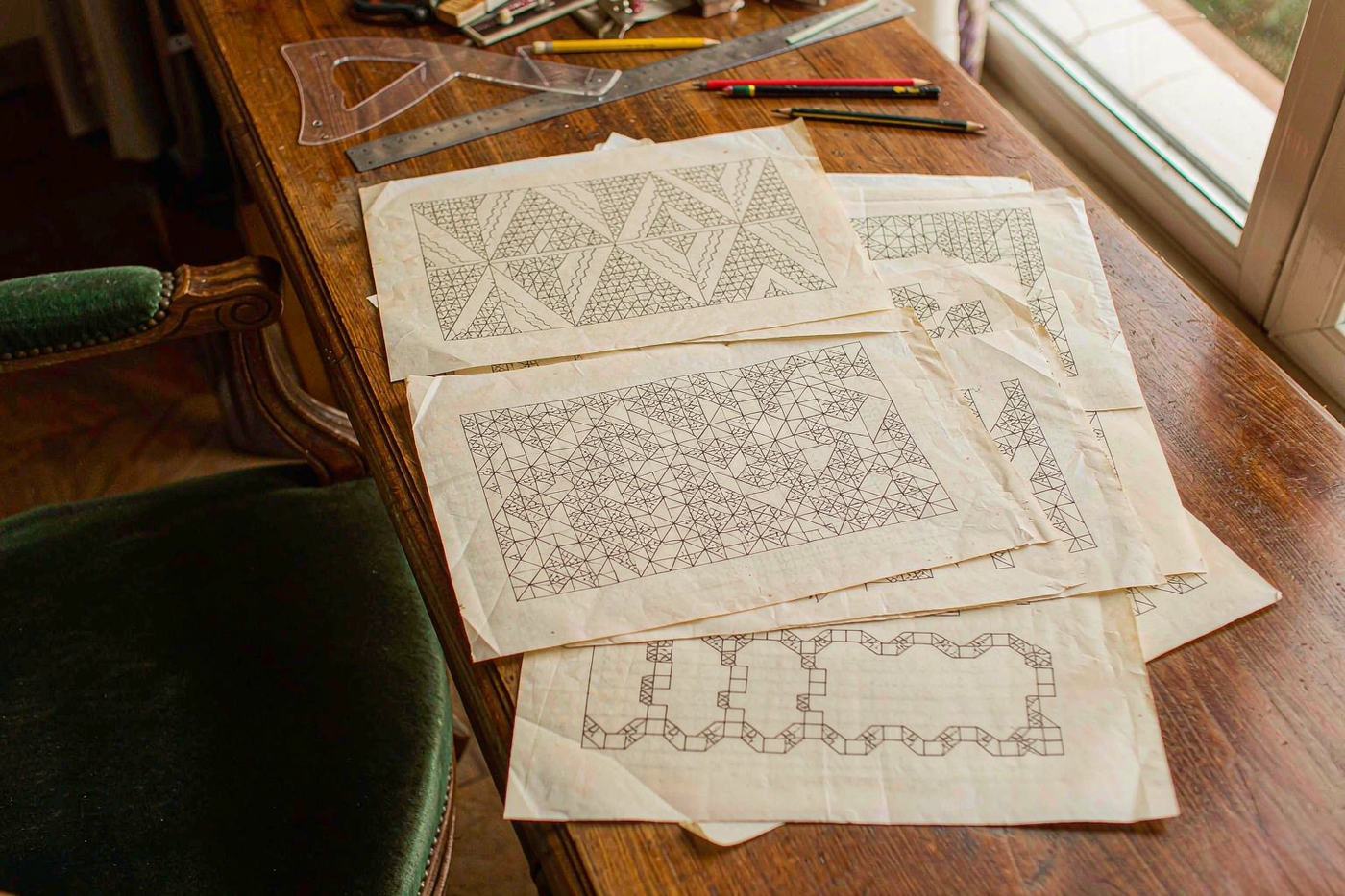
Measurement point Typical increment per size Why the step differs Chest width +2.5 to +3.5 cm Largest step; carries the visual balance of the body Body length +1.5 to +2 cm Proportional but restrained to keep hem line Shoulder width +1 to +1.5 cm Changes slowly or the armhole distorts Sleeve length +1 to +1.5 cm Follows body length plus arm mobility Neck opening +0.5 to +0.75 cm Smallest step; a wide neck ruins the front line Hem width +2 to +3 cm Tracks chest to keep the silhouette Post-wash grading and colour-lot behaviour
One letter, three markets
Size ratios: how a women's order is actually packed
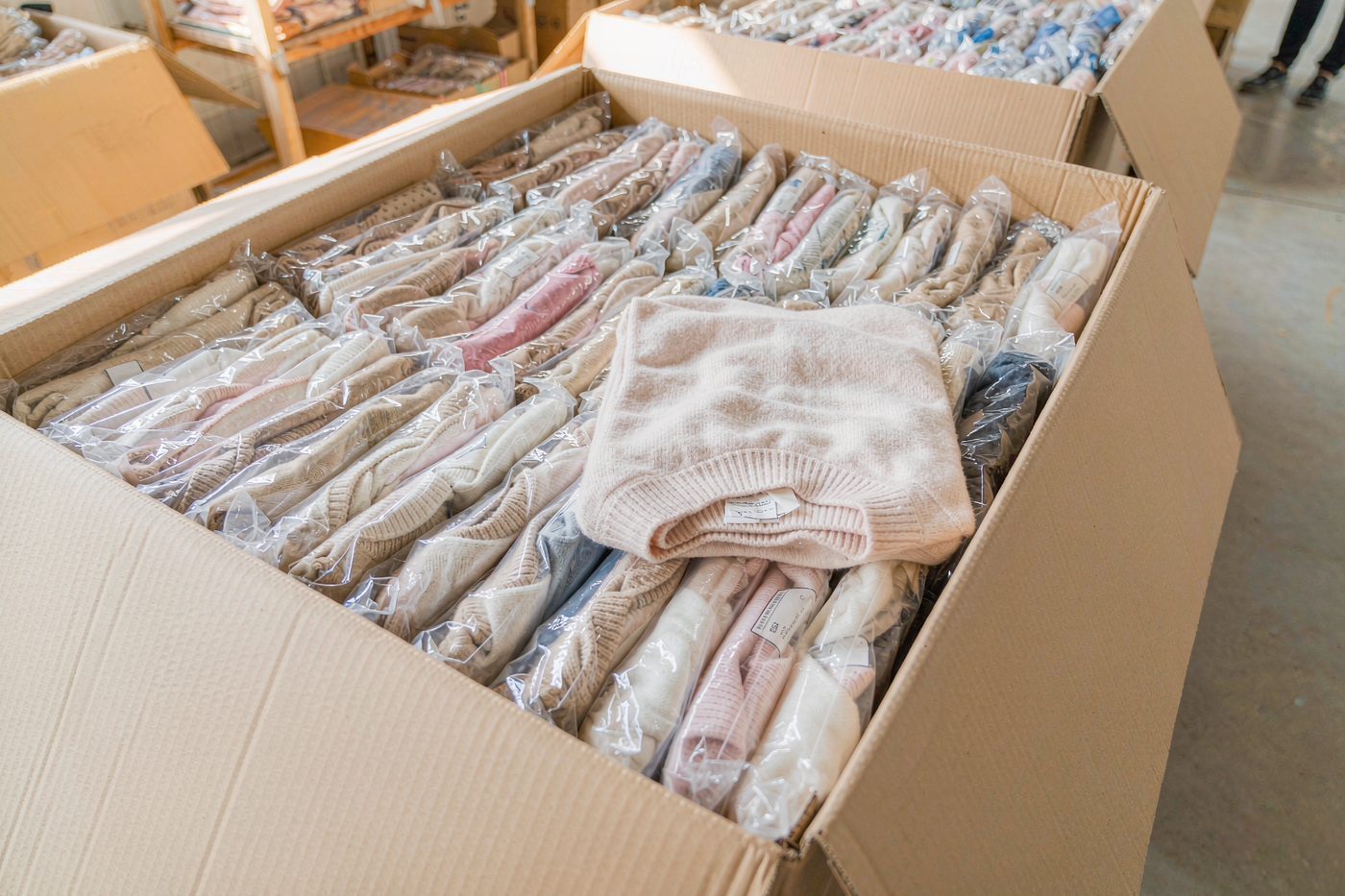
Tolerances, plus sizes and the size set
What to lock with your supplier before bulk
FAQ
How should a women's cashmere sweater fit?
Do cashmere sweaters run small compared to other knits?
What is a size ratio in a wholesale order?
How big should grade increments be between women's sizes?
What is a size set and why does it matter before bulk?