Cashmere Knit Dresses: Gauge, Drape and Fit for a Retail Range
- Share
- Issue Time
- Nov 26,2026
Summary
A factory-side guide to cashmere knit dresses: why a dress is not a long sweater, gauge and weight decisions behind drape, recovery testing that protects the silhouette, silhouette-by-silhouette fit risks, size-set validation across markets, wash and blocking protocol, and the six-point dress-specific bulk inspection.
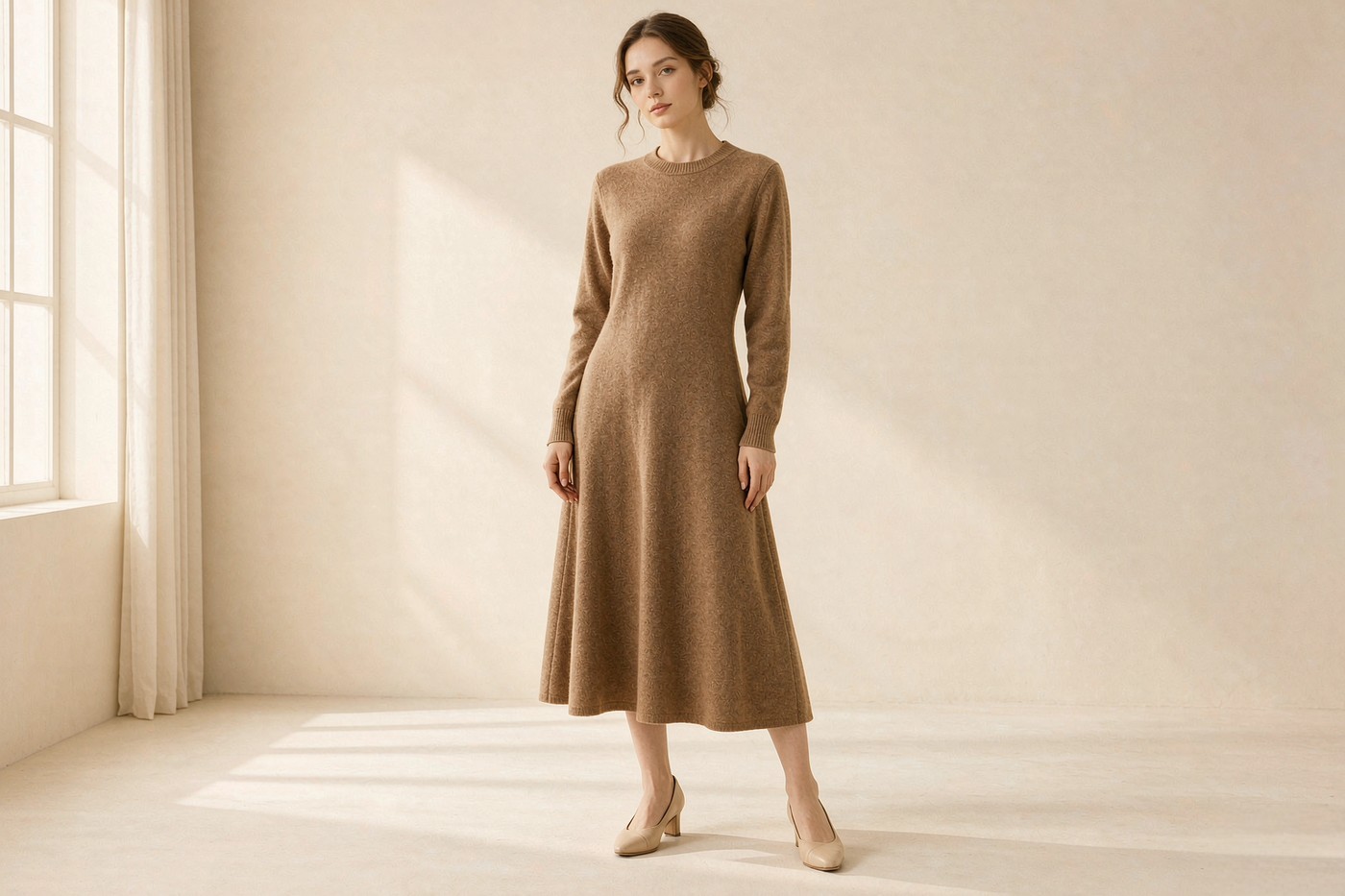
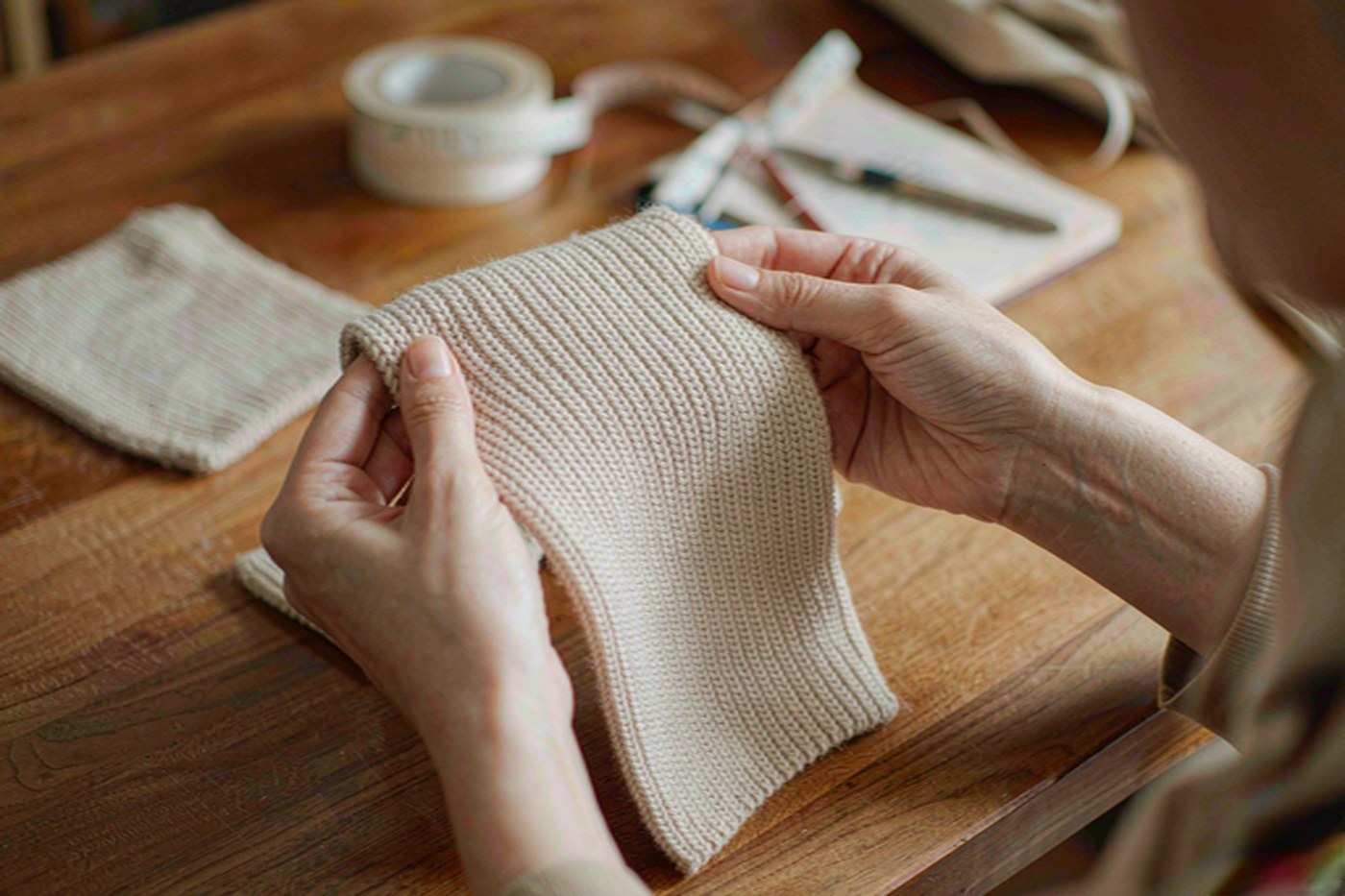
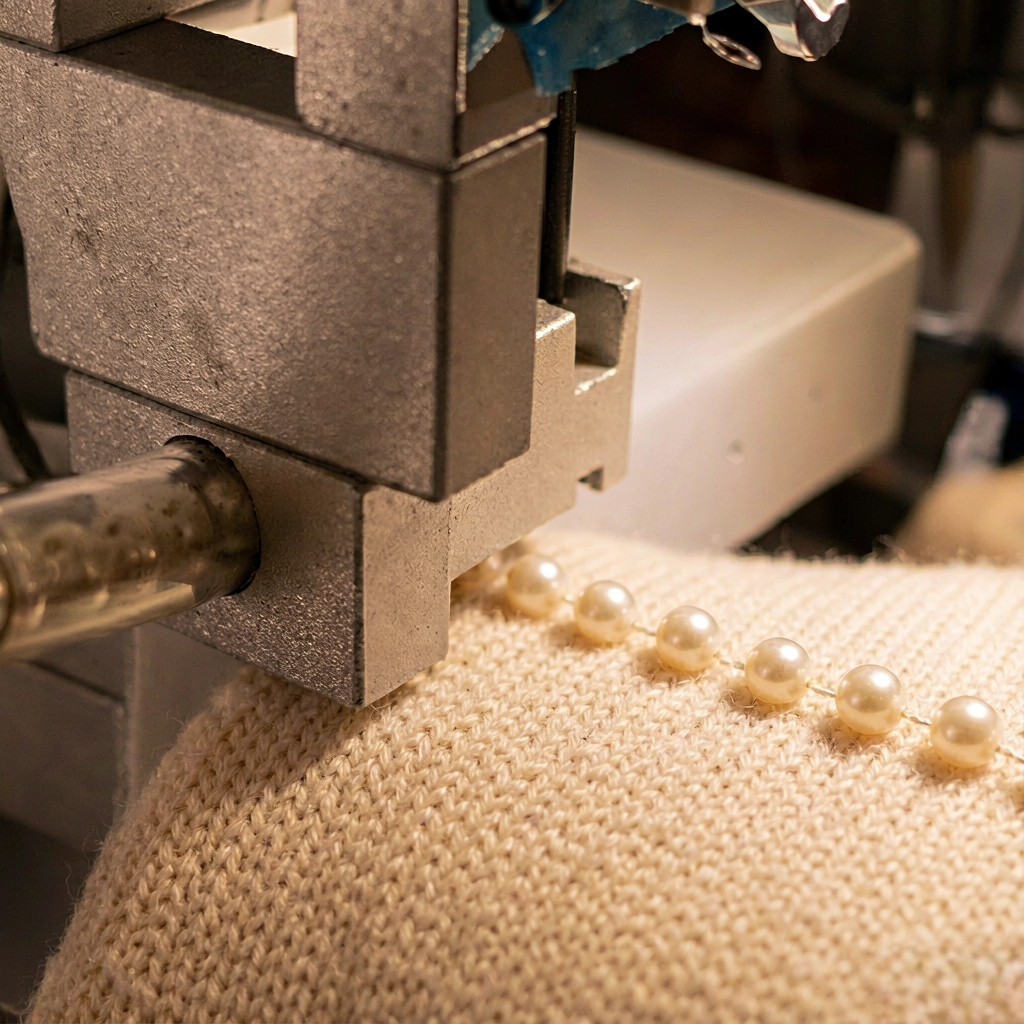
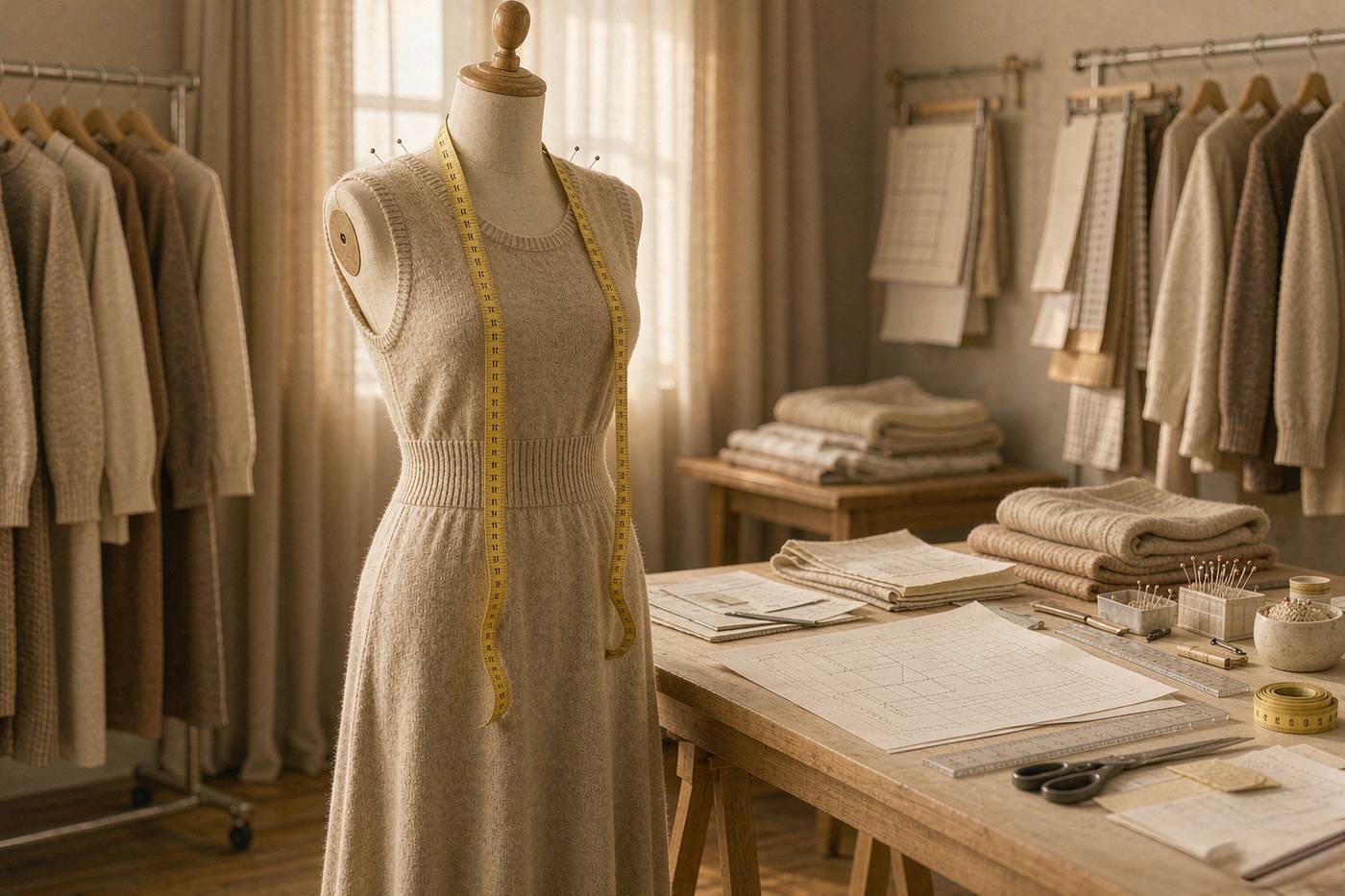
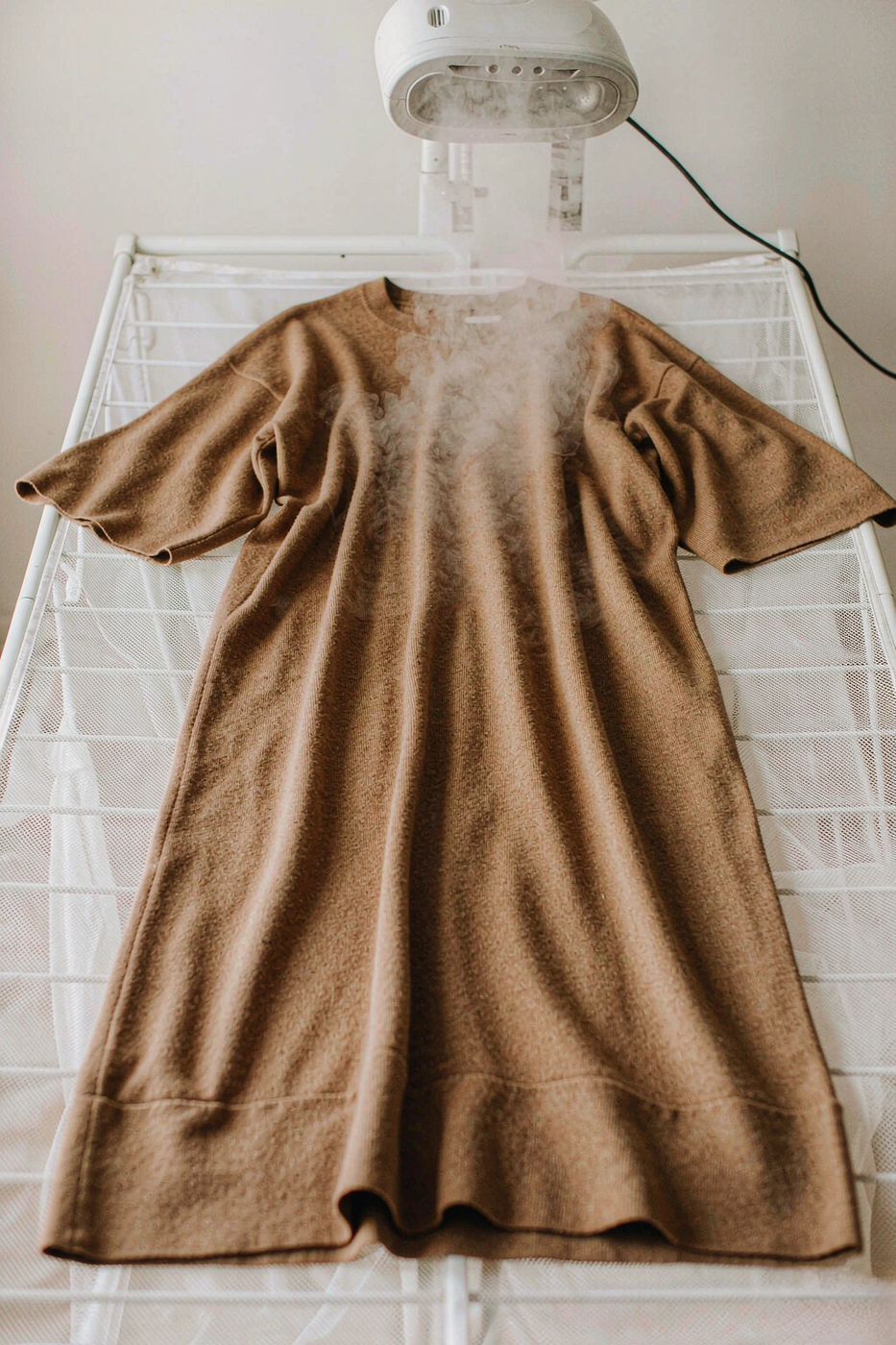
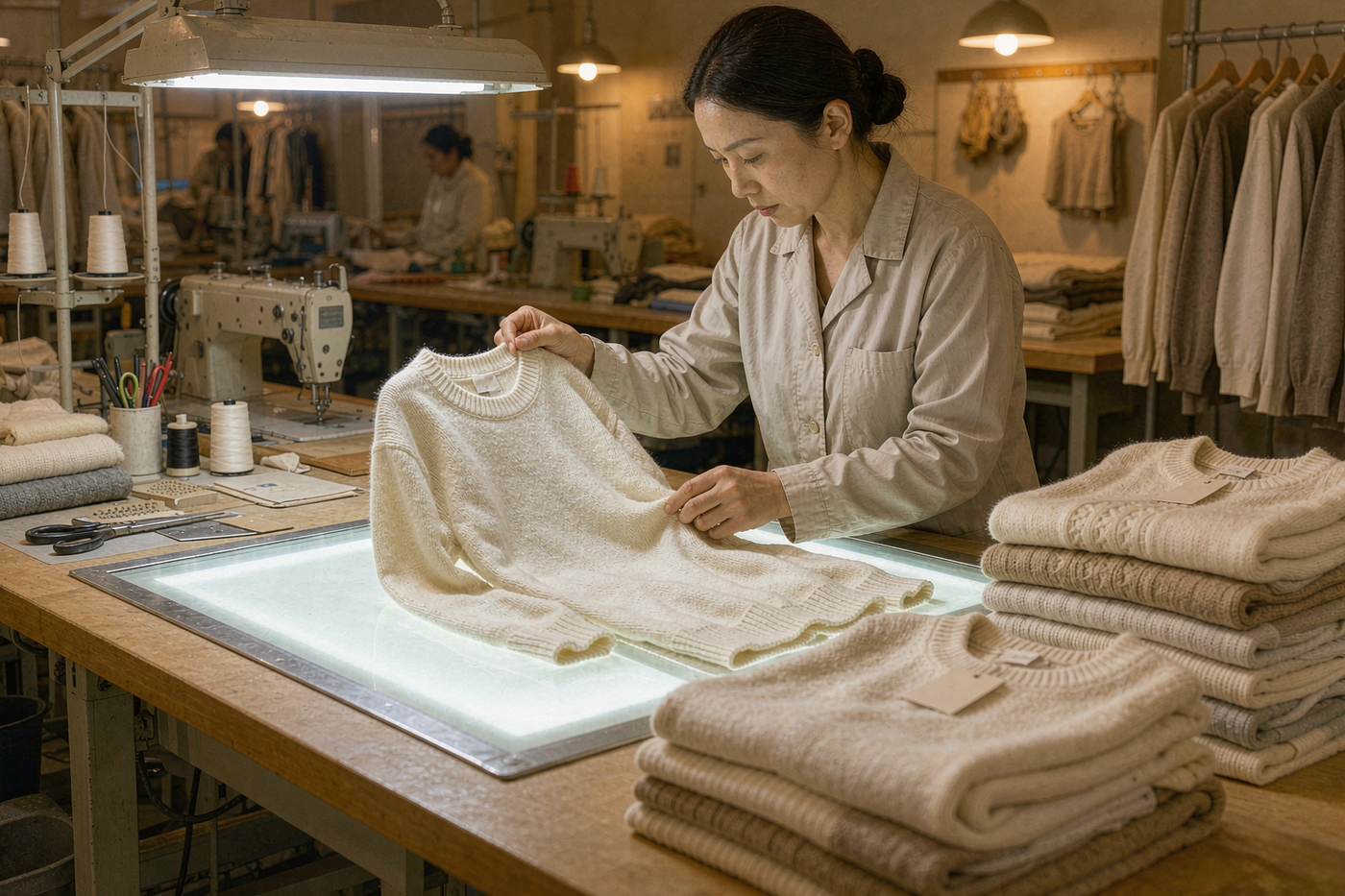
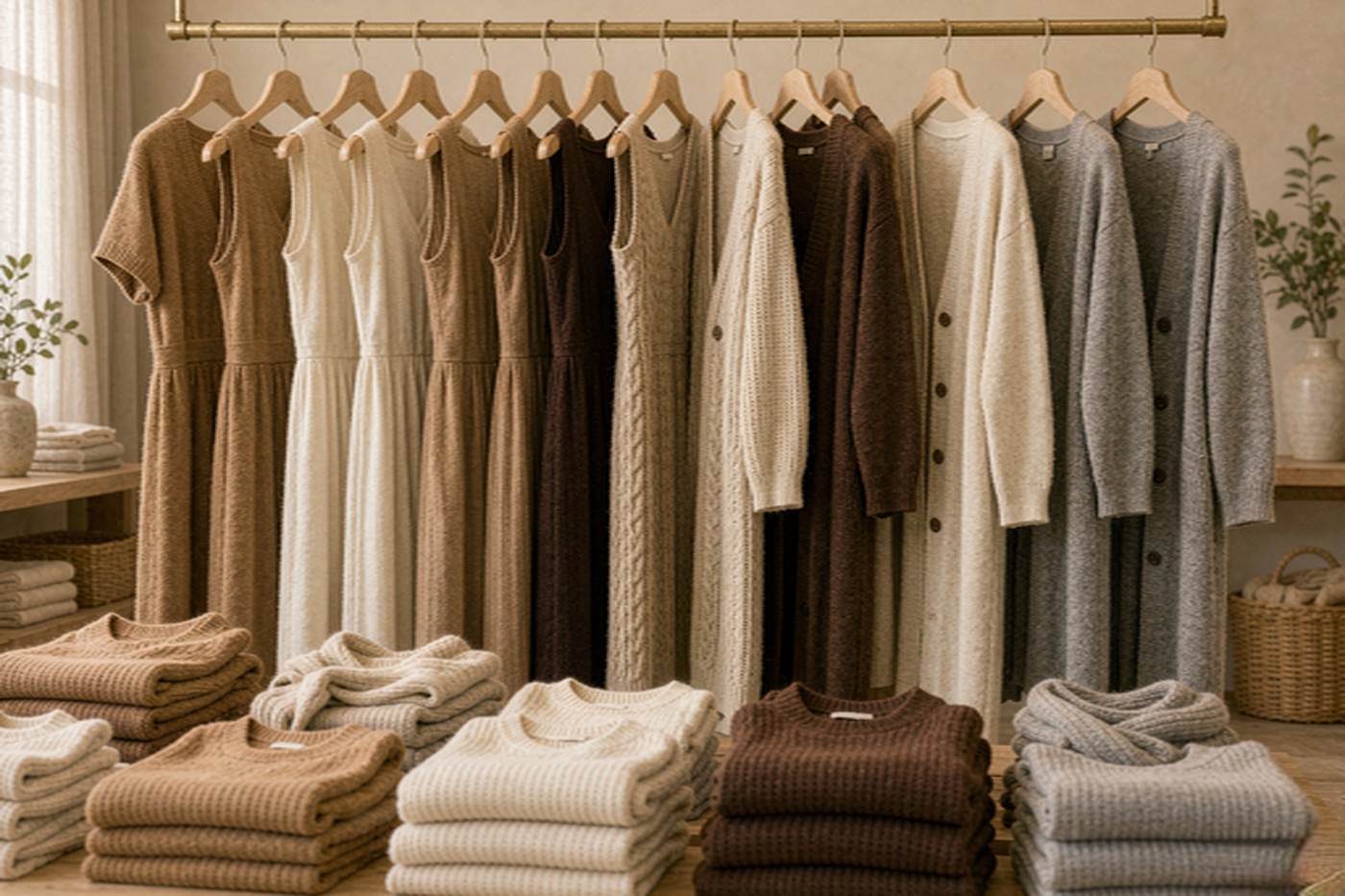
A cashmere knit dress is the only garment in the range that has to satisfy two sets of physics at once. Editorial roundups of the category keep arriving at the same conclusion from the consumer side: the dress that skims and holds its line wins, and the one that clings at the hip or droops at the hem goes back in the bag a winter-long wear test of sweater dresses. Retail buying guides list the same silhouettes season after season — crew and V-neck midis, ribbed turtlenecks, belted A-lines — because the category sells as a complete outfit in one piece how retailers frame the midi knit dress offer. But factory-side, a dress is not a sweater with a longer body. Doubling the panel length changes how weight hangs, how hems behave, how sleeves migrate, and how every measurement in the size set interacts with gravity. Buyers who spec a dress like a long sweater discover the difference in bulk — at the seat, at the hem, and at the shoulders. This guide walks the garment from gauge to inspection: what each construction decision does to drape and recovery, where fit risk concentrates, and what a dress-specific inspection has to catch that a sweater checklist will miss. The structural difference starts with the body panel. A sweater panel carries its own weight for roughly sixty centimetres; a dress panel carries it for ninety or more, which means every gram of fabric mass below the bust works as a permanent, gentle traction on the shoulder line, the neckline and the hem. Women's knitwear manufacturing guides treat dresses and knit bottoms as their own product family for exactly this reason — they sit apart from sweaters and cardigans in range planning, with their own fit logic how women's knitwear ranges split sweaters from knit dresses. Where a sweater is judged on chest and sleeve measurements, a dress adds bust-to-waist-to-hip shaping that menswear-derived sweater blocks simply do not carry, plus a hem that must hang level on a moving body. The second difference is length tolerance. On a sweater, a two-centimetre drift in body length is a cosmetic deviation; on a midi dress, the same drift lands the hem at a different point of the leg entirely, and guides for the category place the wearable window between mid-thigh and ankle in fairly narrow bands per height knitwear terms and silhouettes explained for dresses. Knit fabric also grows under its own weight — a dress on a hanger overnight can measure longer than the same dress folded flat — so length specs have to be defined against a defined resting state, not measured casually off a rail. Professional practice is to specify measured length with the garment laid flat, washed once and relaxed, because that is the state the customer actually lives with. Gauge decides how the fabric hangs before a single gram of yarn weight is chosen. OEM gauge guides draw the map plainly: lower gauges knit heavier, more open fabrics with visible stitch definition, while higher gauges knit finer, smoother surfaces that fall closer to the body — roughly 3–5 gauge for chunky statement knits, 7–9 for classic mid-weight pullovers, and 12–14 and above for fine cashmere with an elegant, drapey hand a manufacturer's gauge chart for sweaters and dresses. For dresses the rule of thumb in the trade is directional rather than absolute: fine gauges drape close and read refined; chunky gauges stand away from the body and read cosy, but a chunky knit on a long panel stretches under its own mass and needs the hem engineered for it. Weight interacts with gauge in a way dress programmes make very visible. The same yarn worked at a looser tension produces a fabric that grows more in wear and in wash; worked firmer, it holds shape but reads denser on the body. Panel length compounds any tension drift: a fault invisible on a forty-centimetre sweater front becomes a visible skew across a hundred-centimetre dress panel, because machine tension drift during a shift accumulates over every course knitted why long dress panels amplify tension drift. The practical consequence for buyers is to review the gauge choice on the swatch and on a full-length panel, not on a sweater-size sample — a fabric that drapes beautifully at sweater scale can sag noticeably once the hem has another forty centimetres of cloth pulling on it. Recovery — the fabric's ability to spring back after stretch — is the property that decides whether a dress still fits in March. On a sweater, weak recovery shows up as bagged elbows; on a fitted dress it shows up as a bagged seat, stretched bust panels and a hem that no longer sits where it did on delivery. Knitwear fit guides rank it as the defining risk of the category, and the mitigation is procedural: run several wash-and-wear cycles on the first sample, measure chest, waist, hip, hem and sleeve before and after, and approve the size set only against those numbers recovery testing before bulk production. The discipline takes one wash cycle and one measuring session; skipping it moves the discovery to your customer's review section. Yarn and structure choice sets the recovery ceiling. Single-jersey constructions drape beautifully but curl at the edges and lack stability at hems and necklines; double-knit and interlock structures are heavier and steadier, which suits close-to-body dresses; rib adds the extensibility that body-skimming fits rely on, but rib also loses vertical length over repeated washes more than any other basic structure how structure choice sets fit risk per silhouette. Panels also need a defined relaxation window before any cutting or linking operation — garment-maker specifications call for agreeing the relaxation time up front, because panels handled too early shrink after the first wash and take the labelled measurements with them why panel relaxation is specified before cutting. A signed, washed reference swatch kept on file per style is the most protective insurance the whole programme has. The category's silhouettes each carry a different dominant risk, which is why one QC checklist across all of them under-protects at least two. Style guides for dresses break the map down the same way factory risk tables do silhouette-by-silhouette fit behaviour: Length is a silhouette decision too. Product roundups in the category track hem windows against height: mid-thigh at roughly 18–20 inches of shoulder-to-hem length for petite frames, upper-knee at 21–23 for most figures, and midi at 24 inches and above working best on taller frames hem lengths and occasions across the midi dress category. For a range plan, that converts into a simple discipline: pick two hem lengths, grade each against the target market's height distribution, and keep the shorter hem on structures with strong recovery where hem drop risk is lowest. The details layer is where a knit dress range earns shelf distinction — and where careless spec turns selling points into defects. Hems come first: a tubular or linked hem holds a clean edge on straight structures, while elasticized hems help chunky gauges resist the drop that fabric mass causes; either way the hem finish must be specified with its intended recovery, not assumed. Side slits on midi and maxi lengths restore stride that a narrow column steals — walk-and-sit checks belong in fit sessions for exactly this reason. Belts, ties and waist seams define the silhouette but add their own failure points: loops sized for the shipped belt, tie anchoring that survives a tug, and waist seams placed to flatter rather than shorten the torso waist definition and proportion choices in knit dresses. Trims and surface work scale differently on a dress than on a sweater. Beadwork, embroidery and metallic yarns read as intentional luxury across a long panel — and each bead row, sequin line or float must be anchored for a garment that bends at the waist and hip hundreds of times a week; attachment points sit in the highest-movement zones of the garment. Pattern behaviour matters too: jacquard floats on the reverse can snag on jewellery and bag straps, so float length limits belong in the tech pack for any patterned dress why jacquard floats need snag limits. And on plain knits, production specifications flag the classic faults to inspect at panel stage — needle lines and barre across the fabric face, checked on a light table before linking rather than after assembly panel-level inspection for needle lines and barre. Dress fit fails in bulk more often than in samples because the risks are size-dependent. Hem drop, for instance, is largest on chunky styles where fabric mass is highest — and it does not scale evenly: shortening the pattern only works if the drop is uniform, and in practice it differs across sizes why hem drop must be validated per size. The working rule from production guides is to validate fit on the base size, the smallest and largest sizes, and any size where the grading block changes — four fit sessions, not one. Sleeve length deserves its own checkpoint: sleeves drop under shoulder weight and can also shrink lengthwise after the first wash, and the net effect varies by yarn, so a sleeve-specific recovery measurement belongs in the sample protocol sleeve length stability on long-sleeve dresses. Market sizing adds a second layer. Women's sizing varies more by region than menswear — US, UK and EU numbering diverge, and what a brand calls a medium is not a universal body — so the size system has to be fixed before grading, and the full graded set validated on fit models rather than extrapolated from the base size US, UK and EU sizing systems in women's knitwear. Wear-test journalism keeps finding the same failure mode from the customer side: size charts that diverge wildly between labels, so the customer measures a dress they already own instead of trusting the chart sizing variance found in a category wear test. Suppliers who publish a real graded measurement chart — bust, waist, hip, hem sweep and length per size, measured on relaxed garments — remove the argument before it starts. And the defects that end a dress's life early are recoverable ones: permanent bagging at seat and hip, side-seam pilling, and thinning where the knit stretches over the body are the three flaw groups professional graders lead with how professionals grade a knit dress for wear flaws. Finishing is where the sample's measurements become the bulk garment's measurements. Wash protocol is the most overlooked variable in knit dress consistency: if samples were approved after hand washing and flat drying, bulk must go through the same wash, dry and steam process — written into the spec and tied to the care label — or the two will diverge in exactly the dimensions customers notice first, hem and sleeve length wash protocol consistency between sample and bulk. After washing, blocking sets the garment to final measurements while damp, restoring size and squareness before drying; care guides treat blocking as the standard remedy for knits that have stretched or shifted in the wash blocking and shape restoration for knits. The garment's afterlife belongs to the care instructions you print. Wool and cashmere dresses felt — permanently mat — under heat and agitation, which is why gentle wash, flat dry and folded storage dominate credible care guidance in the category; hanging a wet or heavy knit dress is the fastest way to gift it extra length felting risks and care terms for wool knits. For the spec sheet, three entries carry most of the value: the exact wash recipe per style, the drying position, and the storage instruction printed on the care label. Style guides for consumers converge on the same trio — rest the garment between wears, wash gently, dry flat — which makes the factory care label and the retail styling advice reinforce each other instead of contradicting. A dress lot needs a dress-specific inspection sheet; one inherited from sweaters will miss the defects that matter. The dress additions, in priority order: Sequence matters as much as the checklist. The reliable order runs yarn approval, a washed swatch, first sample, fit comments, corrected sample, size-set approval, pre-production sample, and finally bulk — with a top-of-production check against the approved pre-production sample, because skipping any step moves the risk downstream into committed goods the full approval sequence from yarn to bulk. On a dress, each skipped checkpoint has a named failure waiting for it, and none of them are subtle by the time they reach a carton. None of this engineering lands on the shelf without a range built around it. The cashmere dress range shows the silhouettes this guide describes running as production bodies, and the 2026 collection hub places them inside the wider programme — the women's sweater range they layer under, the fine-gauge tank layering pieces that solve the sheerness question, and the cashmere leggings and brushed knitwear that extend the same story through winter. The sleepwear collection carries the same drape logic into relaxed fits. When you are ready to spec a dress programme, contact us with your silhouette and size plan — the factory page shows the gauge coverage and finishing lines behind it, and the buyer FAQ answers the short questions first. It depends on the silhouette. Fine gauges of 12–14 and above give the smooth, close-draping surface that straight and ribbed styles need; 7–9 covers classic mid-weight dresses with balanced structure; 3–5 produces chunky statement knits that stand away from the body but stretch under their own mass on a long panel. Manufacturer gauge charts treat the chart as a starting map, confirmed through swatches, wash tests and full-length panels rather than chosen on paper. Hem drop comes from fabric mass working on low-recovery fabric, and it scales unevenly across sizes. The controls are: choose a structure with real recovery or an elasticized hem finish, run wash-and-wear recovery tests on the first sample, validate the largest size as well as the base, and keep bulk on the same wash protocol the sample was approved with. Shortening the pattern only works if the drop is uniform — which it rarely is. Double-knit and interlock structures are the steadiest on hems and necklines, which suits close-to-body dresses. Ribbed bodycon styles fit beautifully but carry the highest vertical length loss over repeated washes and the highest bagging risk at seat and knee. Straight and fit-and-flare styles sit in between — the flare needs a stable knit to hold it, or it softens into waves after a few wears. Fix the size system first — US, UK and EU numbering diverge, and a medium is not a universal body. Grade with height in mind as well as circumference, since hem length lands differently on the same garment across heights. Then validate the full graded set with fit samples: base size, smallest, largest, and any size where the grading block changes. Publish a real graded measurement chart measured on relaxed garments so buyers do not have to guess. Six dress-specific points: hem levelness and symmetry, recovery at seat and hip under stretch, sheerness in fitted zones when held against light, left-to-right sleeve length symmetry, shade and pilling after the promised wash cycle, and trim integrity under a tug test. Sweater checklists stop at chest and sleeve measurements — which is exactly where a dress programme gets surprised.
Why a Knit Dress Is Not a Long Sweater
Gauge and Weight: the Two Dials Behind Drape
Yarn and Recovery: the Stretch Test That Protects the Silhouette
Silhouettes: Straight, Fit-and-Flare, Rib and Turtleneck

Details That Sell: Hems, Slits, Belts and Trims
Validating Fit Across the Size Range
Washing, Blocking and Shape Retention
What Bulk Inspection Must Catch on a Dress
FAQ
What gauge should a cashmere knit dress be knitted at?
How do you stop a knit dress from dropping at the hem?
Which knit dress silhouettes hold their shape best after washing?
How should a knit dress range be sized across markets?
What should inspection check on a dress that a sweater checklist misses?